How to Overseed Your Lawn in Autumn: Step-by-Step UK Guide
A thin, patchy lawn doesn’t need digging up. Overseeding means sowing fresh grass seed straight into the lawn you’ve already got. Done properly, it thickens tired grass, fills bare patches and crowds out moss and weeds, all without starting again.
Autumn is one of the best times to do it, but timing matters more than most guides admit, especially in Scotland. This guide covers when to overseed, exactly how to do it step by step, which seed to choose and how to look after it afterwards. Everything we mention is in stock online, and you can order it for Click & Collect from your local Home Hardware store.
Quick Answer: How to Overseed a Lawn
- Kill any moss and wait for it to blacken.
- Mow a little shorter than usual.
- Rake out dead moss and thatch hard.
- Aerate any compacted areas with a fork.
- Loosen and level bare patches, adding a thin layer of top soil if needed.
- Sow the seed evenly in two directions.
- Rake it in lightly so it’s touching the soil.
- Water with a fine spray and keep the surface moist.
- Keep off it until the new grass is established.
When Is the Best Time to Overseed a Lawn in the UK?
Late summer to early autumn is the sweet spot. The soil is still warm from summer, which grass seed needs to germinate, and the cooler, wetter weather stops it drying out. New grass sown then also gets several weeks to root before winter.
Spring is the other good window, usually from April once the soil warms up. Spring-sown grass has longer to establish before winter, but it has to compete with weeds and can dry out quickly in a warm spell.
Is October Too Late to Overseed?
Not always, but you’re running out of time. Grass seed is generally reckoned to need soil temperatures of around 8 to 10°C to germinate well, and the soil cools quickly through October, especially in Scotland. Here’s an honest rule of thumb:
- Early October, mild forecast: go ahead. Coastal gardens like much of Ayrshire often stay mild enough. Expect germination to be slower than the days quoted on the pack.
- Mid to late October, or frost forecast: do the prep now (moss, raking, aerating, levelling) and sow in April. Seed that germinates late can be killed off by the first hard frost before it has rooted.
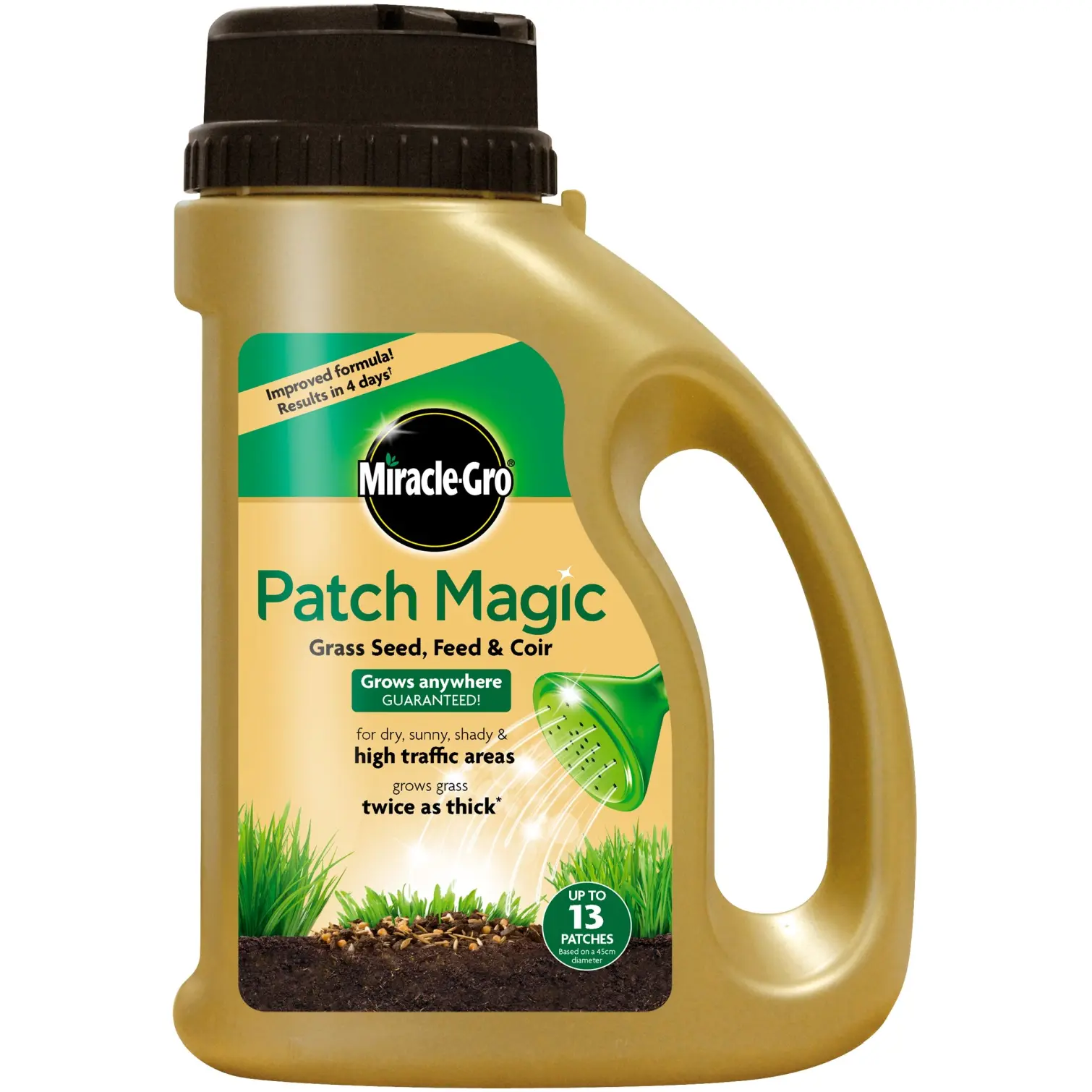
- Bare patches only: Miracle-Gro Patch Magic 1015gr is worth a try later in the season. Its coir holds moisture and a binder stops the seed washing away.
What You’ll Need to Overseed a Lawn
| What you need | Why | Our pick |
|---|---|---|
| Grass seed | Thickens thin grass and fills bare patches | Doff Fast Growing Grass Seed 500g |
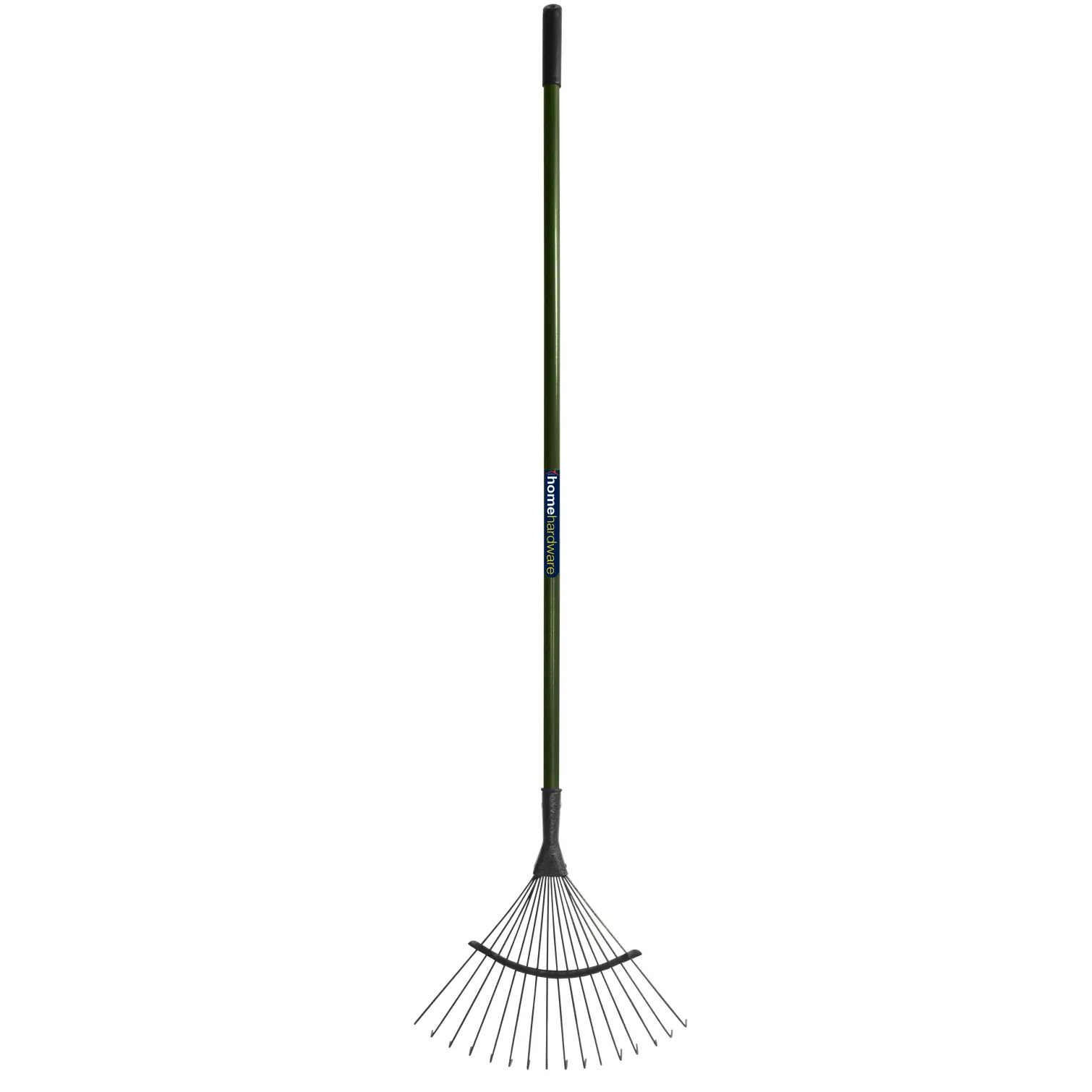
| Lawn rake | Pulls out moss and thatch, works seed in | Home Hardware Lawn Rake |
| Fine spray watering | Waters seed without washing it away | Hozelock Multi Spray Gun |
| Moss killer (if you have moss) | Kills moss before you rake it out | Vitax 50sqm Lawn Sand |
| Top soil (optional) | Levels hollows and gives seed a rooting layer | Growmoor Top Soil 25ltr |
| Fork or aerator (if compacted) | Opens up hard ground so roots can grow | Home Hardware Digging Fork |
| Spreader (bigger lawns) | Even coverage with no bare stripes | Westland Lawn Drop Spreader 41cm Spreading Width |
Step 1: Deal With Moss and Weeds First
This is the step most guides skip, and it’s why a lot of overseeding fails. If your lawn is mossy, the new seed lands on a spongy mat of moss rather than soil, and it never roots.
Treat the moss first with a moss killer such as Vitax 50sqm Lawn Sand (covers up to 50m²), Westland Lawn Sand 200sqm for bigger lawns, or Miracle-Gro Evergreen Mosskill + Feed 80sqm. Wait for the moss to go black, then rake it all out in Step 3. The Westland Aftercut autumn feed and moss killer is an excellent pre-winter treatment for established lawns too.
Step 2: Mow the Lawn Short
Cut the grass a little shorter than you normally would. Don’t scalp it, but a close cut lets light, water and seed reach the soil, and makes it much easier to see what you’re doing in the next steps. Collect the clippings rather than leaving them on the surface.
Step 3: Scarify to Remove Thatch and Dead Moss
Thatch is the layer of dead grass, moss and debris that builds up at the base of a lawn. A little is normal, but too much stops seed reaching the soil.
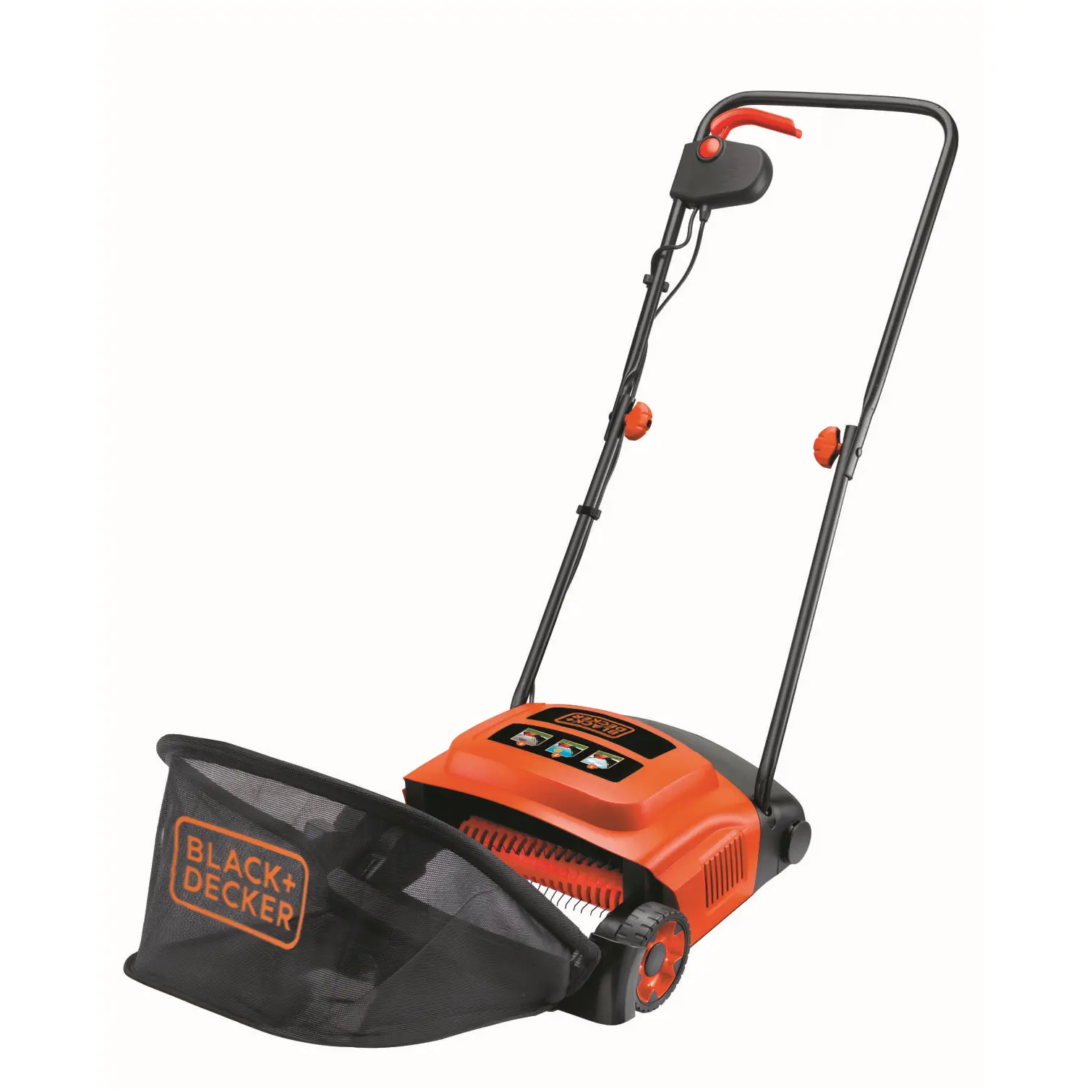
For a small lawn, a spring-tine rake does the job. Rake hard in one direction, then again at right angles. The Home Hardware lawn rake is a good budget option, and the Kent & Stowe lawn rake has flexible tines that lift moss and thatch without digging into the soil. For a larger or very mossy lawn, the Black+Decker 600W electric lawn raker does the hard work for you, with three working heights for light raking or deeper scarifying.
Your lawn will look worse after this. That’s normal. The bare, scratched-up areas are exactly where the new seed needs to land.
Can You Overseed Without Scarifying?
You can, but you’ll waste a lot of seed. Seed sitting on top of thatch dries out, gets eaten by birds or washes away. If your lawn has very little moss or thatch, a good firm rake is enough. If it’s spongy underfoot, scarify first.
Step 4: Aerate Compacted Areas
Not every lawn needs this. Aerate if water sits on the surface after rain, the ground feels hard underfoot, or the lawn gets heavy use from kids, pets or garden furniture.
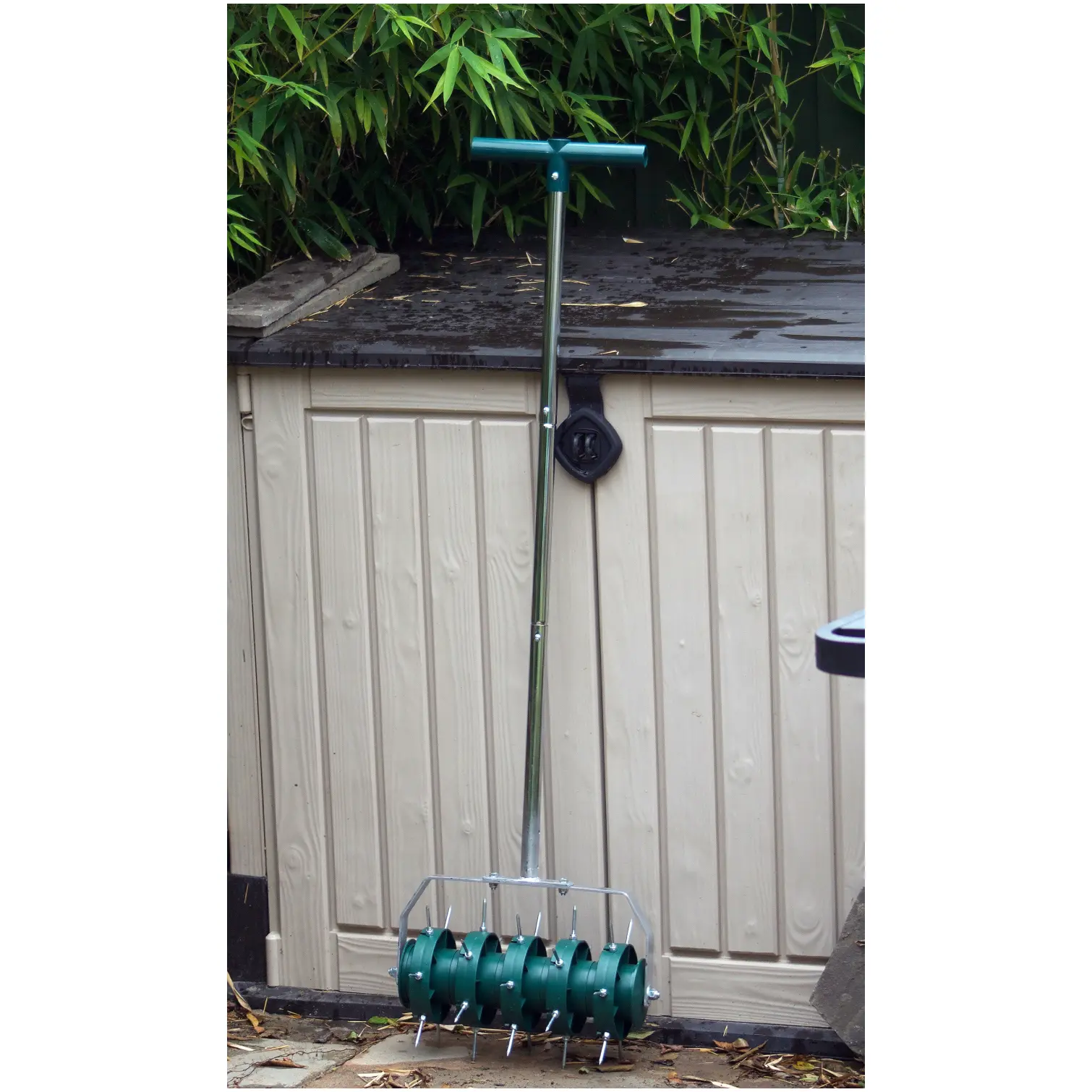
For small areas, push a digging fork into the ground every 10 to 15cm, and rock it back gently to open up the soil. For a whole lawn that’s compacted, the GreenKey lawn aerator creates channels across the area to improve drainage and get air to the roots.
Can You Overseed Without Aerating?
Yes, if your soil isn’t compacted. Aeration is about drainage and root growth, not about the seed itself. If water drains away normally and a fork goes in easily, skip it.
Step 5: Prepare Bare Patches and Level the Surface
On bare or very thin patches, loosen the top centimetre or two of soil with a rake to break the crust, so the seed has something to root into. Fill hollows with a thin layer of Growmoor Top Soil 25ltr, which is made for lawn dressing and levelling as well as planting. Keep it thin. Grass seed needs to be close to the surface, and burying it is one of the most common reasons it fails.
Step 6: Choose the Best Grass Seed for Overseeding
Pick the seed for how your lawn is used, not just the price. Here’s how the range in our grass seed section compares, using what each pack says.
| Seed | Best for | Germination (from the pack) | Coverage (from the pack) |
|---|---|---|---|
| Doff Fast Growing Grass Seed 500g | Overseeding and patch repairs, sun or light shade | As little as 5 to 7 days in good conditions | Not stated, check the pack |
| Doff Multi-Purpose Grass Seed 500g | Everyday lawns on a budget, sun or light shade | As little as 5 to 10 days | Not stated, check the pack |
| Doff Hard Wearing Grass Seed 500g | Kids, dogs and heavy footfall | As little as 7 to 14 days | Up to 20m² per 500g |
| Doff Superfast Grass Seed 500g | Gardens where birds eat the seed | Nitrogen coating for faster germination | Up to 20m² per 500g |
| Canada Green Grass Seed 500g | Fast cover on a small area | Sprouts and covers in about 14 days | Not stated |
| Miracle-Gro Patch Magic 1015gr | Individual bare patches | Seed, feed and coir in one | Patch repair mix |
Our pick for overseeding: Doff Fast Growing Grass Seed 500g. It’s designed for overseeding and patch repairs, it’s suitable for spring and autumn sowing, it grows in sun and light shade, and it germinates fast, which matters when the season is short. For bigger lawns, the 1kg pack works out cheaper.
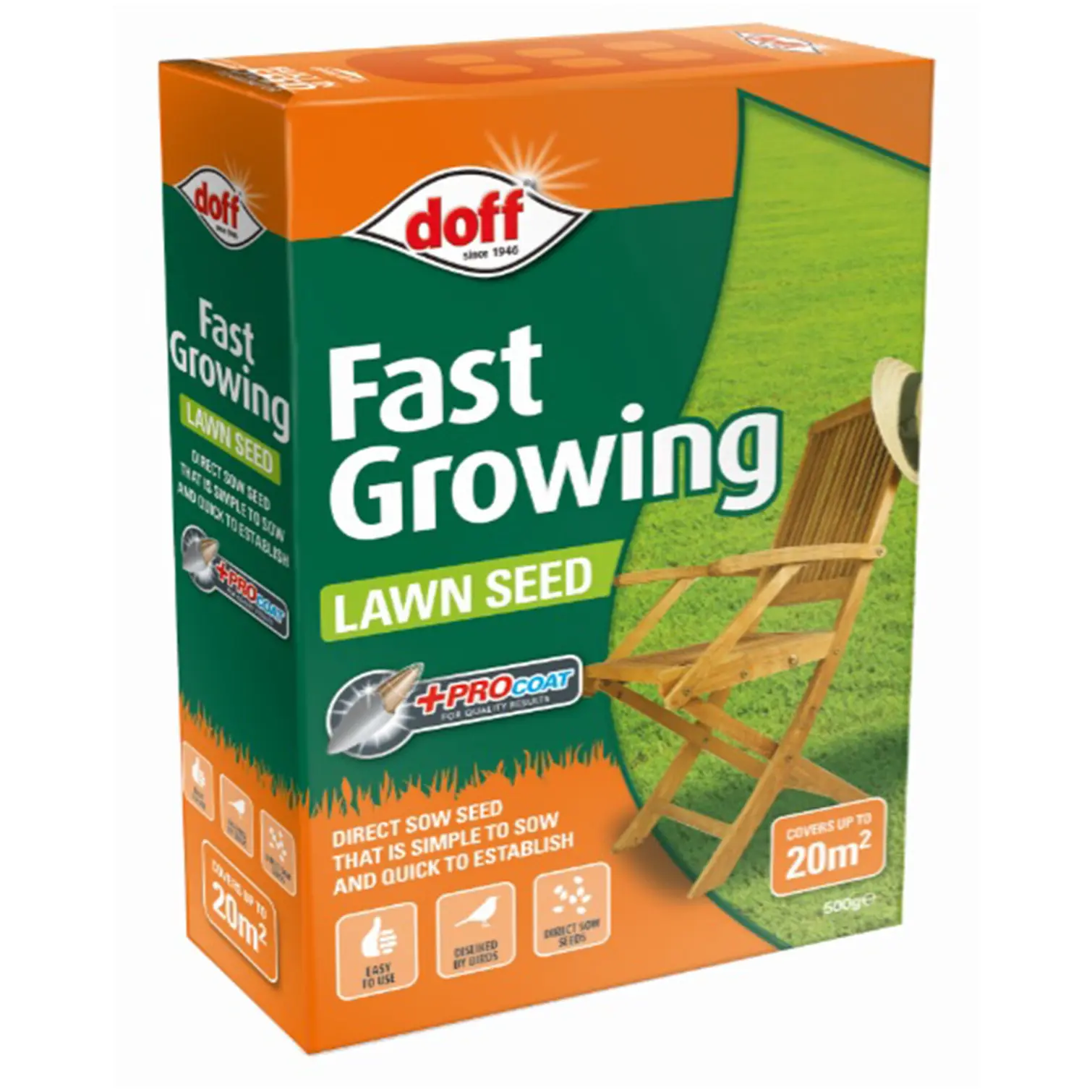
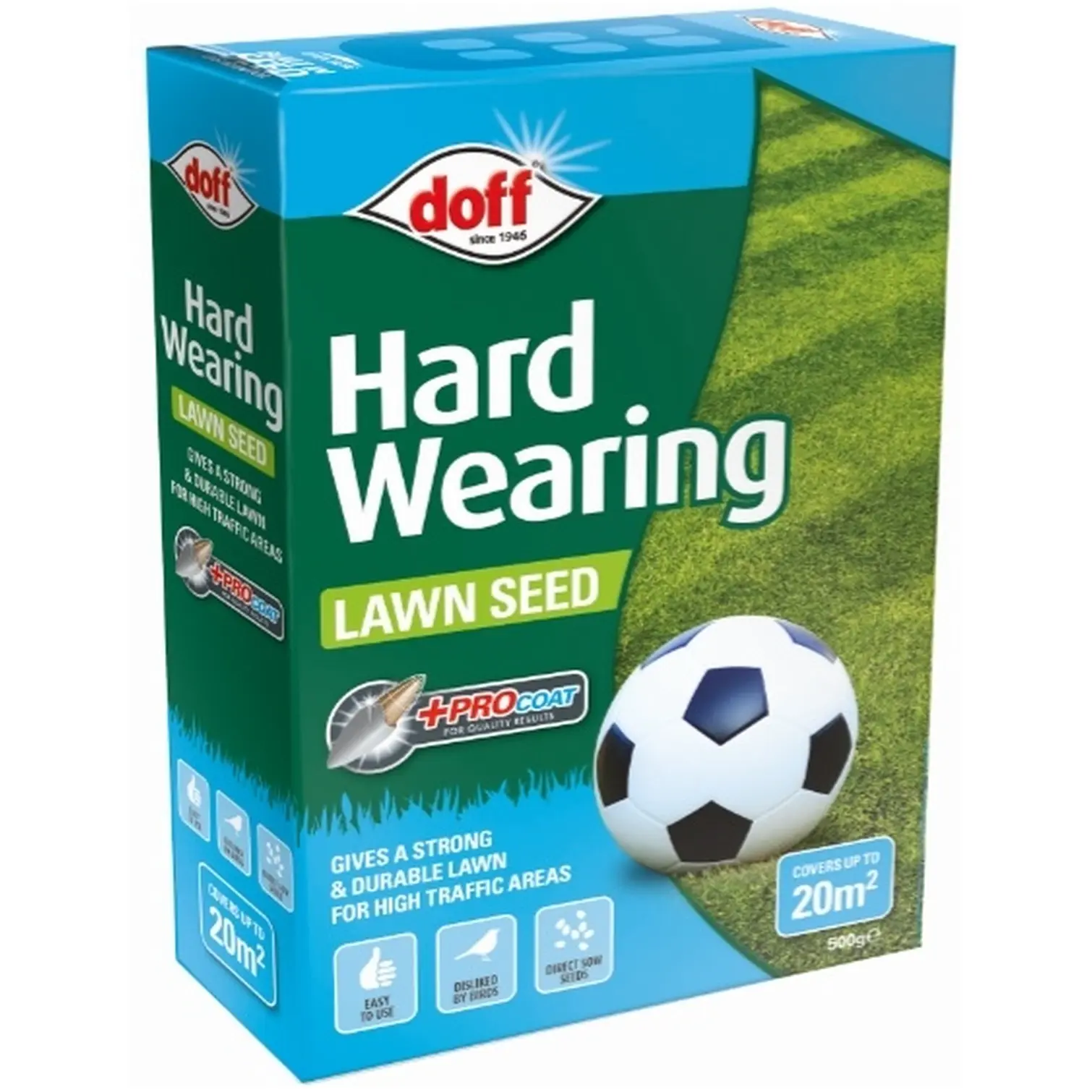
If the lawn takes a beating from children or dogs, choose Doff Hard Wearing Grass Seed 500g instead (also in a 1kg pack). If birds keep eating your seed, Doff Superfast Grass Seed 500g has a bird-deterrent coating.
Best Grass Seed for Shady Lawns
Our Doff Fast Growing, Multi-Purpose and Hard Wearing mixes all grow in sunny and lightly shaded areas. We don’t currently stock a dedicated deep-shade mix, so for a lawn under trees, expect thinner growth and overseed a little more often.
Step 7: Work Out How Much Grass Seed You Need
Measure the lawn and multiply length by width. A 5m by 8m lawn is 40m². For an odd shape, split it into rough rectangles and add them together.
Our Hard Wearing and Superfast 500g packs both say they cover up to 20m², so a 40m² lawn needs about two 500g packs or one 1kg pack. Overseeding into existing grass usually needs less seed than sowing bare soil from scratch, so use these figures as a buying guide and always follow the sowing rate printed on the pack you buy.
Step 8: Sow the Seed Evenly
Split your seed into two halves. Sow the first half walking up and down the lawn, then sow the second half walking across it at right angles. This crosswise method avoids stripes and missed patches, whether you’re sowing by hand or by machine.
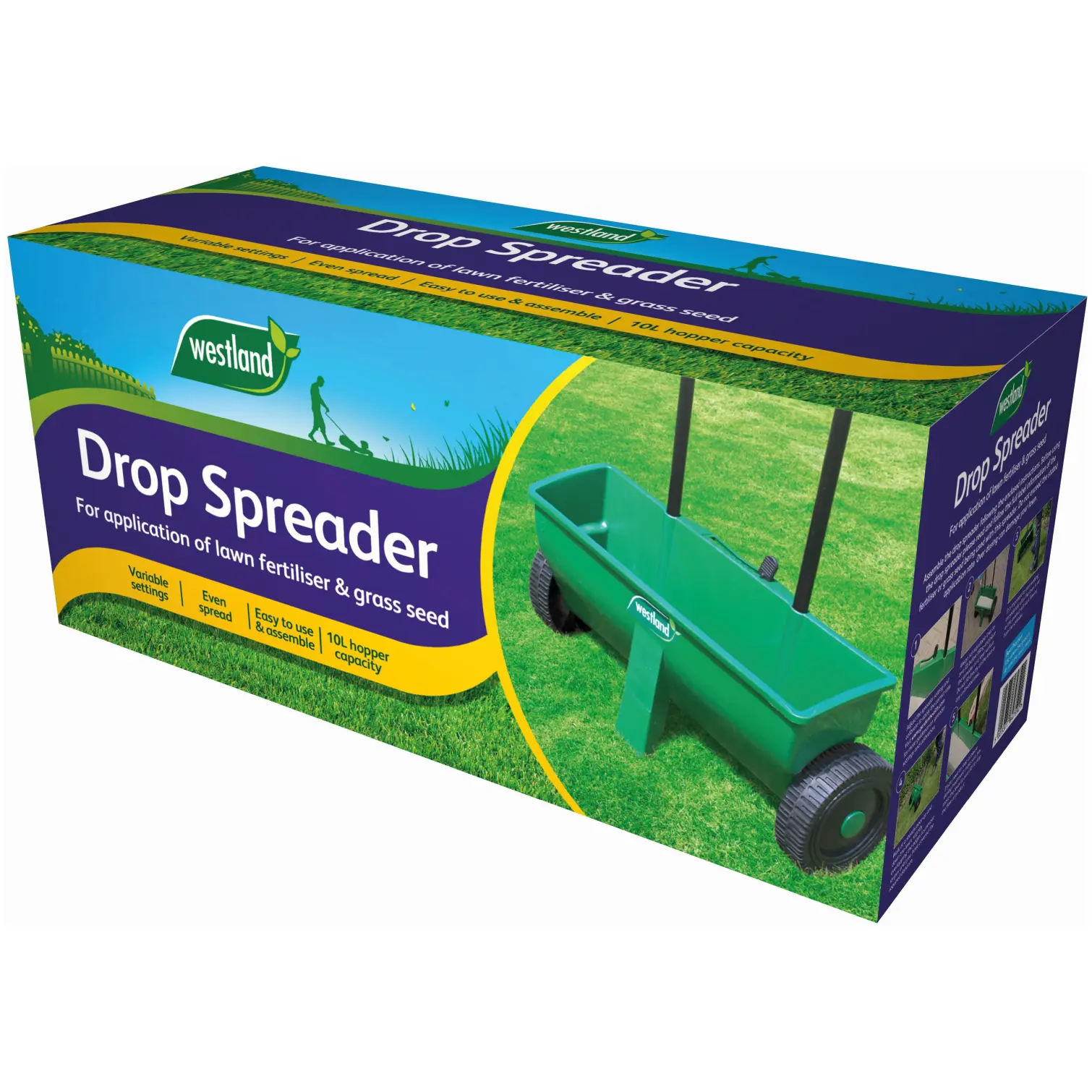
By hand is fine for patches and small lawns. For anything bigger, the Westland lawn drop spreader has a calibration setting for grass seed as well as lawn treatments, so you get an even spread every time. For large lawns, the Miracle-Gro rotary spreader throws a wider spread.
Step 9: Rake the Seed In
Lightly rake over the surface so the seed is mixed into the top few millimetres of soil. Good seed-to-soil contact is the single biggest factor in whether seed germinates. Don’t bury it. On a small area, you can also tread it in gently or press it down with the back of a rake.
Step 10: Water Gently and Often
Seed needs to stay moist until it has germinated and rooted. A heavy jet of water washes it into puddles and leaves bare patches. Use the Fine Rose setting on the Hozelock multi spray gun, which is designed for gently watering seedlings. If you don’t have a hose yet, the Gardena 20m hose starter set has everything you need to connect to an outside tap.
In dry spells, water lightly once or twice a day. Don’t let the surface dry out and re-wet repeatedly, as that cycle can kill germinating seed. In a typical Scottish autumn, the rain usually takes over within a week or two.
Step 11: Aftercare for an Overseeded Lawn
- Keep off it. New roots are shallow and easily damaged. Keep kids, dogs and wheelbarrows off the area until it’s established.
- Mow carefully. Wait until the new grass is a few inches tall and firmly rooted. Use sharp blades, take only the very top off, and lower the height gradually over the next few cuts.
- Don’t feed the new grass yet. Keep feeds and moss killers off newly sown areas until the pack says it’s safe. Established parts of the lawn can still get their autumn feed.
- Clear fallen leaves. A layer of wet leaves blocks light and smothers seedlings. Rake them off gently with a plastic leaf rake.
For the rest of your autumn garden jobs, see our autumn garden tidy guide.
Common Overseeding Mistakes
- Sowing onto moss or thatch. The seed never reaches the soil. Treat, rake and scarify first.
- Sowing too late in the year. Seed that germinates just before a frost rarely survives. In late autumn, prep now and sow in spring.
- Burying the seed. Grass seed needs light and to be near the surface. Rake it in lightly, don’t dig it in.
- Using moss killer or feed at the wrong time. Check every pack for the gap needed before and after sowing.
- Letting it dry out. A few dry days during germination can undo the whole job.
- Walking on it too soon. New grass looks tougher than it is.
Our Recommendation
- Thin, tired lawn: Doff Fast Growing Grass Seed 500g, raked in after a good scarify.
- Family lawn with heavy wear: Doff Hard Wearing Grass Seed 500g.
- A few bare patches: Miracle-Gro Patch Magic 1015gr.
- Mossy lawn: treat with Vitax 50sqm Lawn Sand first, then rake out with the Black+Decker lawn raker.
- Late in October in a cold spot: do the prep now and sow in April.
Frequently Asked Questions
When is the best time to overseed a lawn in the UK?
Late summer to early autumn, while the soil is still warm and the weather is turning cooler and wetter. Spring, from around April once the soil warms up, is the other good window.
Is October too late to overseed my lawn?
Early October can still work if the forecast is mild, particularly in coastal areas, though germination will be slower. By mid to late October, or if frost is forecast, it is usually better to prepare the lawn now and sow in spring.
Do I need to scarify before overseeding?
If your lawn has moss or a thick layer of thatch, yes. Seed needs to reach the soil to germinate. On a lawn with very little thatch, a firm rake is usually enough.
Can I overseed without aerating?
Yes, if the soil isn’t compacted. Aerating helps where water sits on the surface after rain, the ground is hard, or the lawn gets heavy use.
How much grass seed do I need to overseed a lawn?
Measure the area and follow the sowing rate on the pack. As a buying guide, some 500g packs cover up to 20 square metres. Overseeding into existing grass usually needs less seed than sowing bare soil.
How long does grass seed take to grow when overseeding in autumn?
Fast-germinating mixes can show shoots in about a week in ideal conditions, but cooler autumn soil slows this down. Allow two to three weeks for germination in autumn and several more weeks before the new grass is established.
Can I feed my lawn after overseeding?
Not the newly sown areas straight away. Feeds and moss killers can harm young grass, so follow the pack’s guidance on how long to wait. Established parts of the lawn can still be fed.
Related Reading
Shop Lawn Overseeding Essentials


Browse more: Grass Seed, Lawn Feed, Moss Killers & Lawn Sand, Lawn Rakes, Aerators, Spreaders & Electric Rakes, Garden Forks and Sprinklers. Order online for home delivery or Click & Collect from your nearest Home Hardware store.