

DIY Decorating Guide: Everything You Need to Paint a Room Properly
Painting a room is one of the most satisfying DIY jobs there is. It’s also one of the easiest to get slightly wrong: patchy walls, wobbly edges, paint on the carpet, filler showing through.
The difference between a room that looks done and a room that looks professionally done is almost all in the preparation and the tools. This guide covers everything you need to paint a room, in the order you’ll need it, with honest advice on what’s worth buying. Everything here is in stock online, and you can order for Click & Collect from your local Home Hardware store.
What Do I Need to Paint a Room?
Here’s the full decorating tools list. You won’t need every item for every room, but this covers a typical bedroom or living room from start to finish.
| What you need | What it’s for | Our pick |
|---|---|---|
| Paint | Walls, ceiling and woodwork | Crown 7.5ltr Pure Brilliant White Matt |
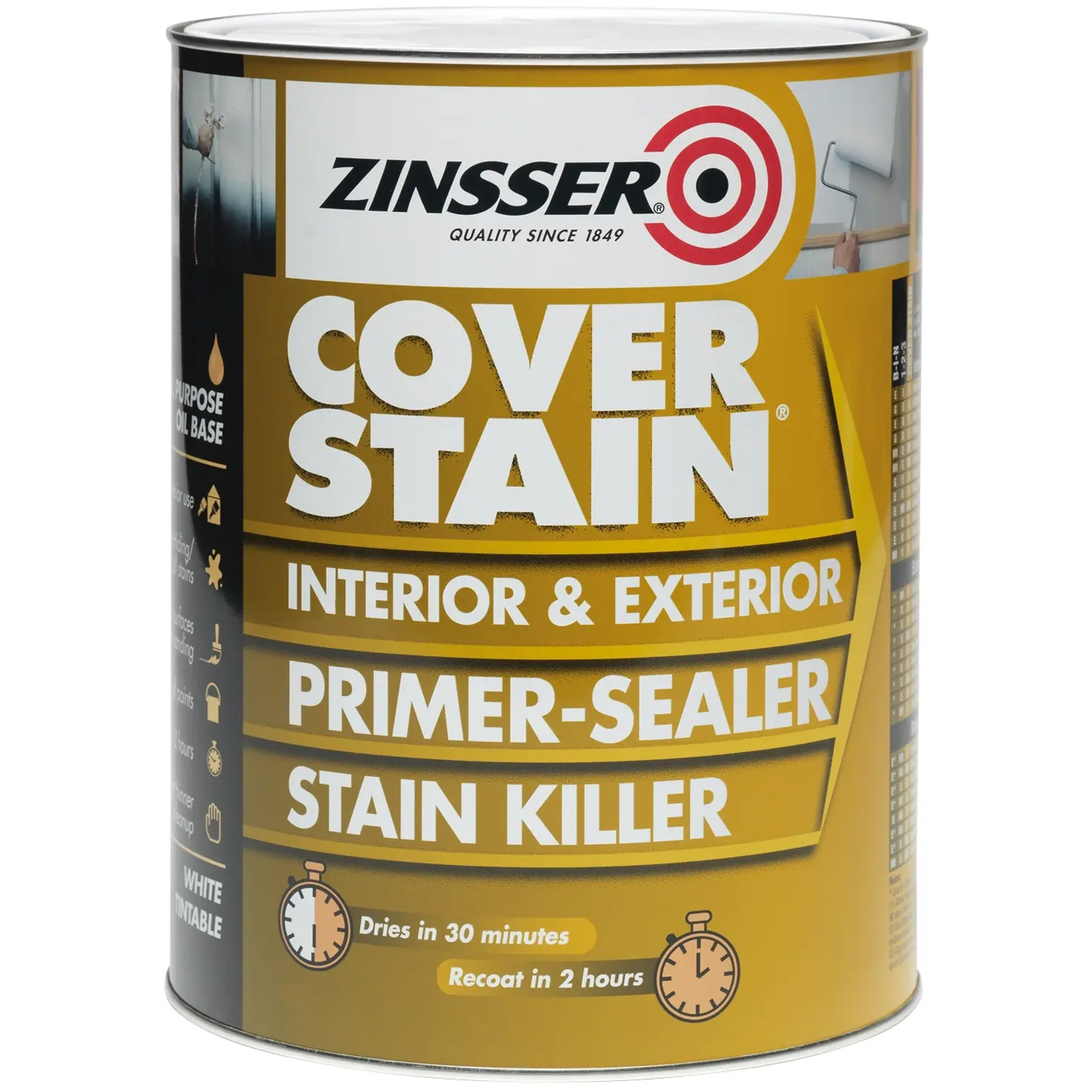
| Primer or stain blocker | New plaster, bare wood, stains | Zinsser Cover Stain Primer & Sealer Stain Killer 500ml |
| Roller and tray | Covering walls and ceilings quickly | Taskpro Paint Roller & Tray 230mm (9″) with 2 Sleeves |
| Spare roller sleeves | A fresh sleeve for each colour | Roller Refills (9″) Triple Pack |
| Extension pole | Ceilings and tall walls without a ladder | Coral Shurglide Telescopic Extension Pole with Flip-Cam Lock 0.6-1.2m |
| Brushes | Cutting in and woodwork | TaskPro 5 Piece Paint Brush Set |
| Mini roller | Doors, small areas and tight spots | TaskPro Mini Roller Set 100mm (4″) |
| Paint kettle | Carrying a small amount of paint up a ladder | ProDec 2.5Ltr Paint Kettle |
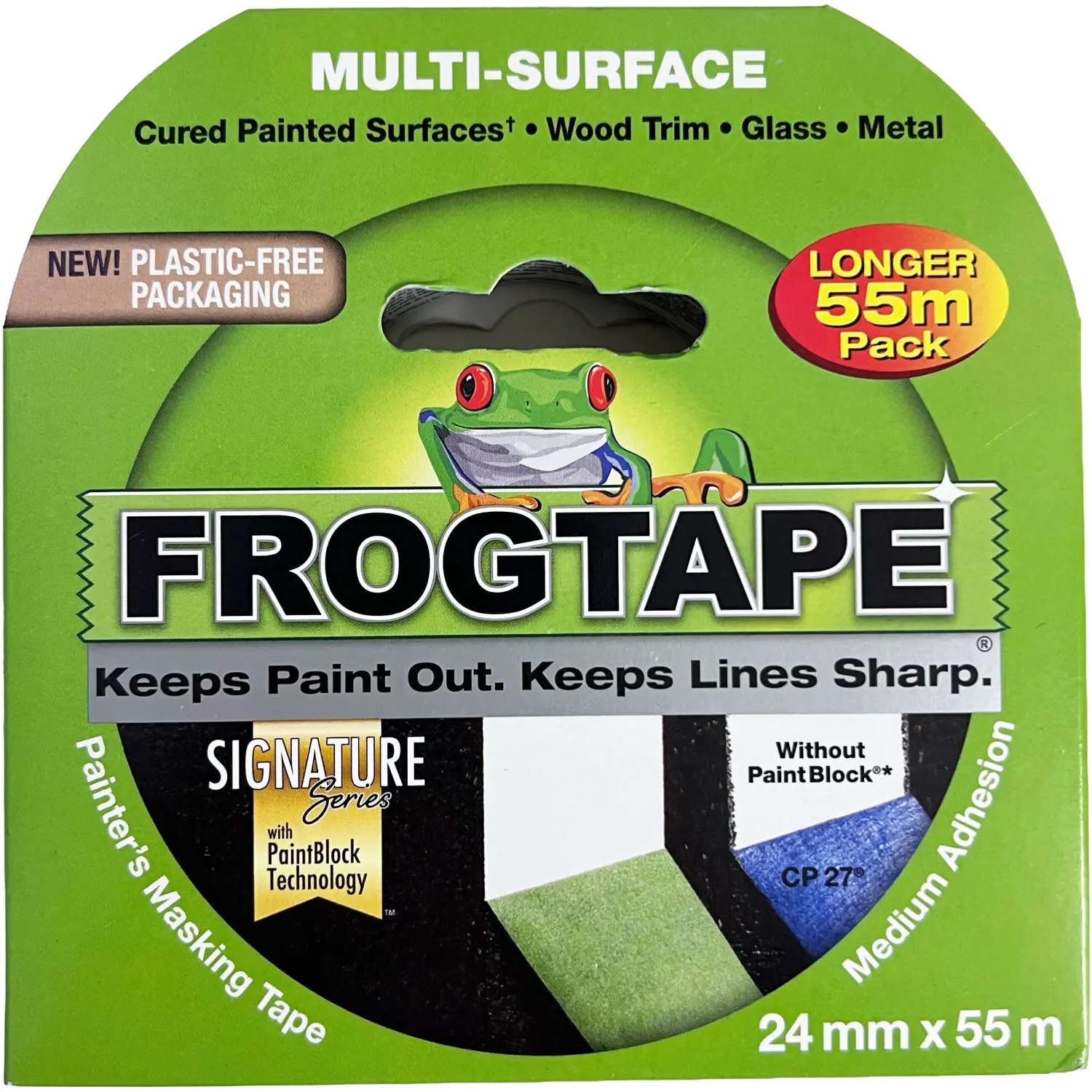
| Masking tape | Clean edges on woodwork and switches | Frog Tape Multi-Surface 24mmx 55m |
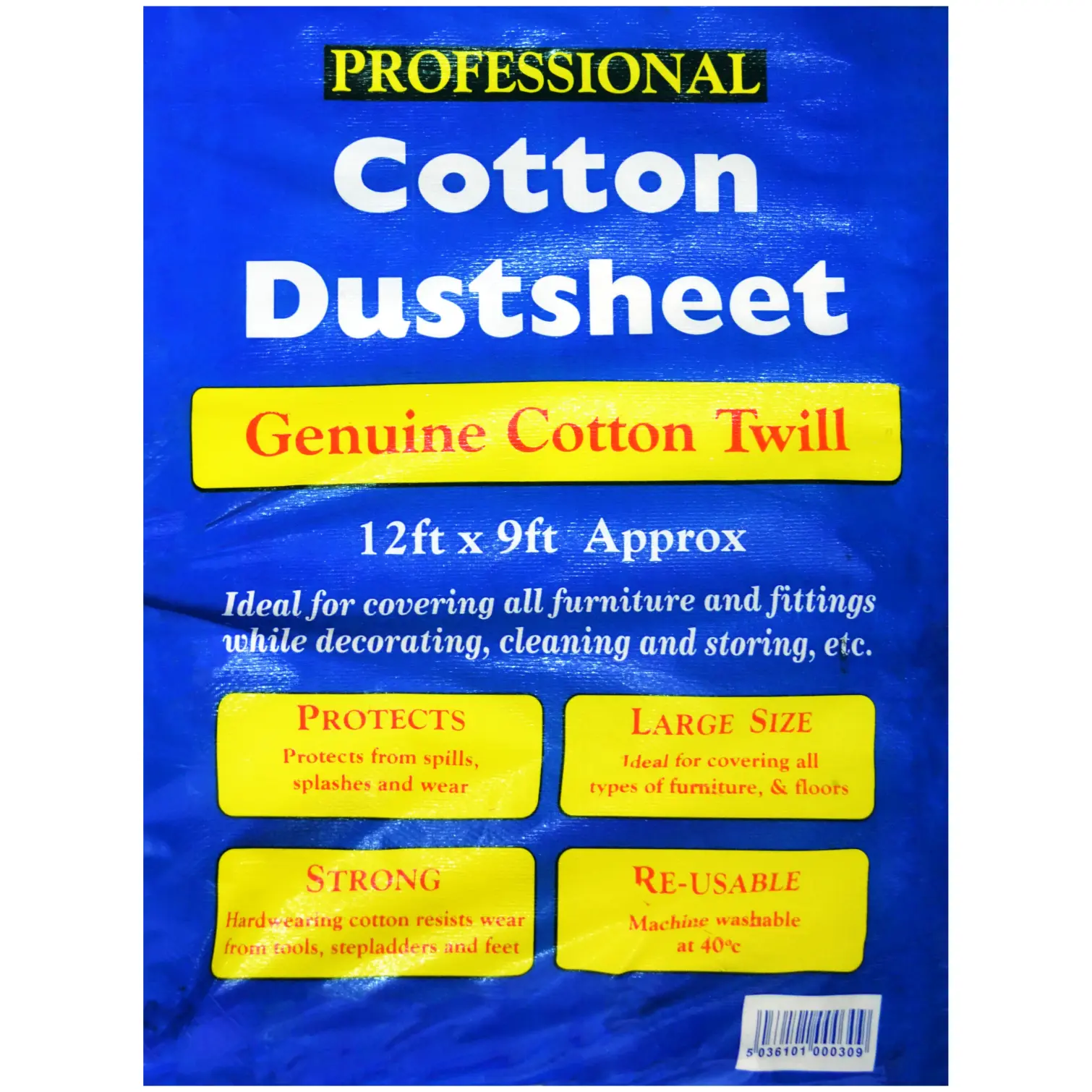
| Dust sheets | Protecting floors and furniture | Tristar Cotton Dust Sheet 12x9ft |
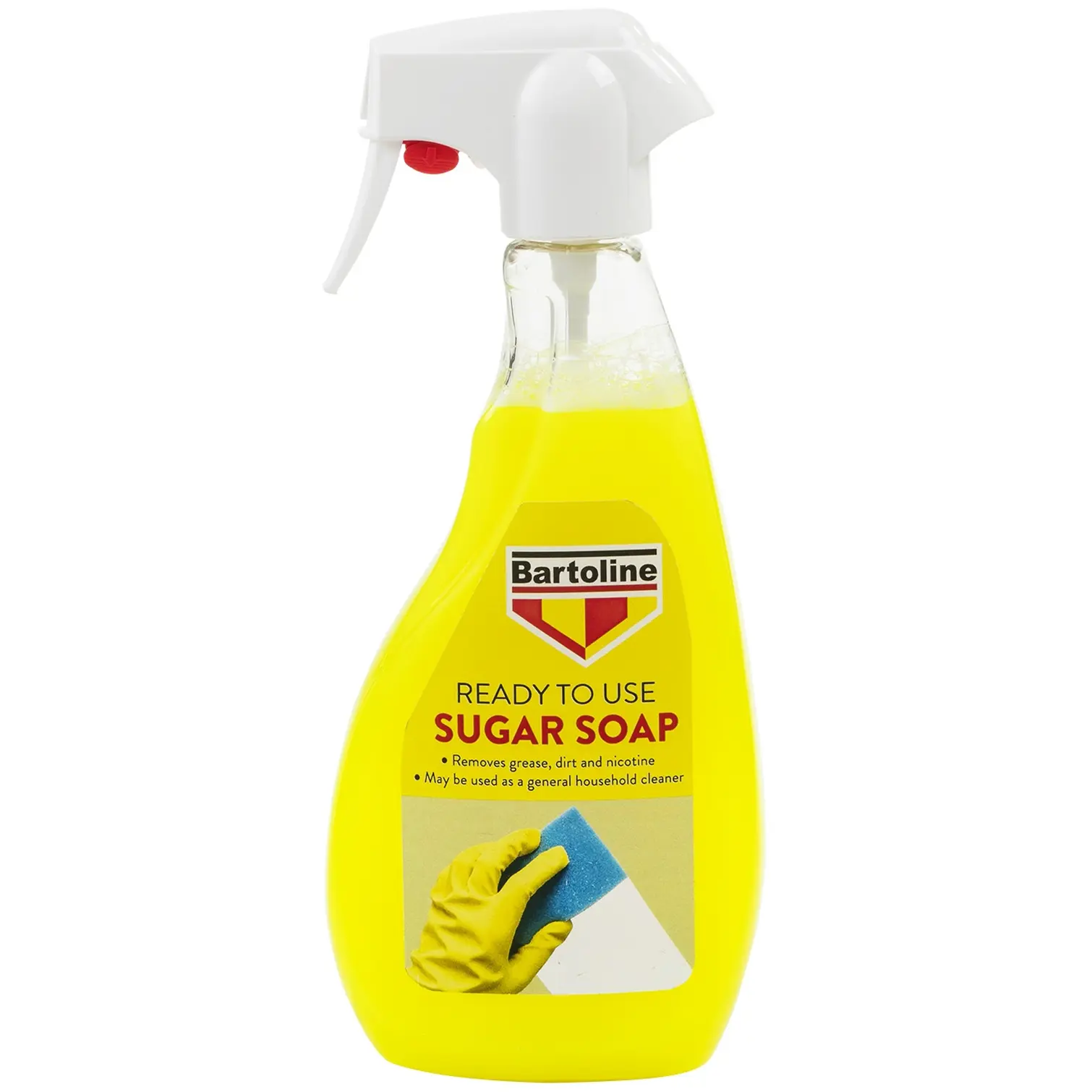
| Sugar soap | Cleaning walls so paint sticks | Bartoline Ready To Use Sugar Soap 500ml |
| Filler | Holes, cracks and dents | Everbuild One Strike Filler 450ml |
| Decorators caulk and gun | Gaps along skirting and frames | Polycell Decorators Caulk 290ml |
| Scrapers and filling knife | Removing flaky paint and applying filler | Stanley 3 piece Scraper Set |
| Sandpaper or sanding sponge | Smoothing filler and keying gloss | Flexi Sanding Sponge Fine/Medium |
| Step ladder | Reaching the top of walls safely | Fortress 5 Tread Aluminum Step Ladder |
| Brush cleaner or wipes | Cleaning up afterwards | Everbuild Wonder Wipes (100) |
How Much Paint Do I Need?
Buying too little means a second trip and a risk the new tin won’t quite match. Buying too much wastes money. Here’s how to work it out.
- Measure the walls. Add up the length of every wall, then multiply by the height. A 4m by 3.5m room is 15m around. At 2.4m high, that’s 36m².
- Take off doors and windows. Roughly 2m² for a door and 1.5m² for an average window. That leaves about 32m².
- Double it for two coats. That’s 64m².
- Divide by the coverage on the tin. Every tin tells you how many square metres a litre covers. If yours says 12m² per litre, you need about 5.3 litres.
In that example, a big tin like Crown 7.5ltr Pure Brilliant White Matt covers the walls with plenty left over for touch-ups. Ceilings are worked out the same way: length times width.
Choosing the Right Paint
Paint is labelled by where it goes and how shiny it is. Get both right and the finish will last for years. Browse the full colour emulsion range or our white emulsions.
| Finish | Sheen | Best for | Watch out for | Our pick |
|---|---|---|---|---|
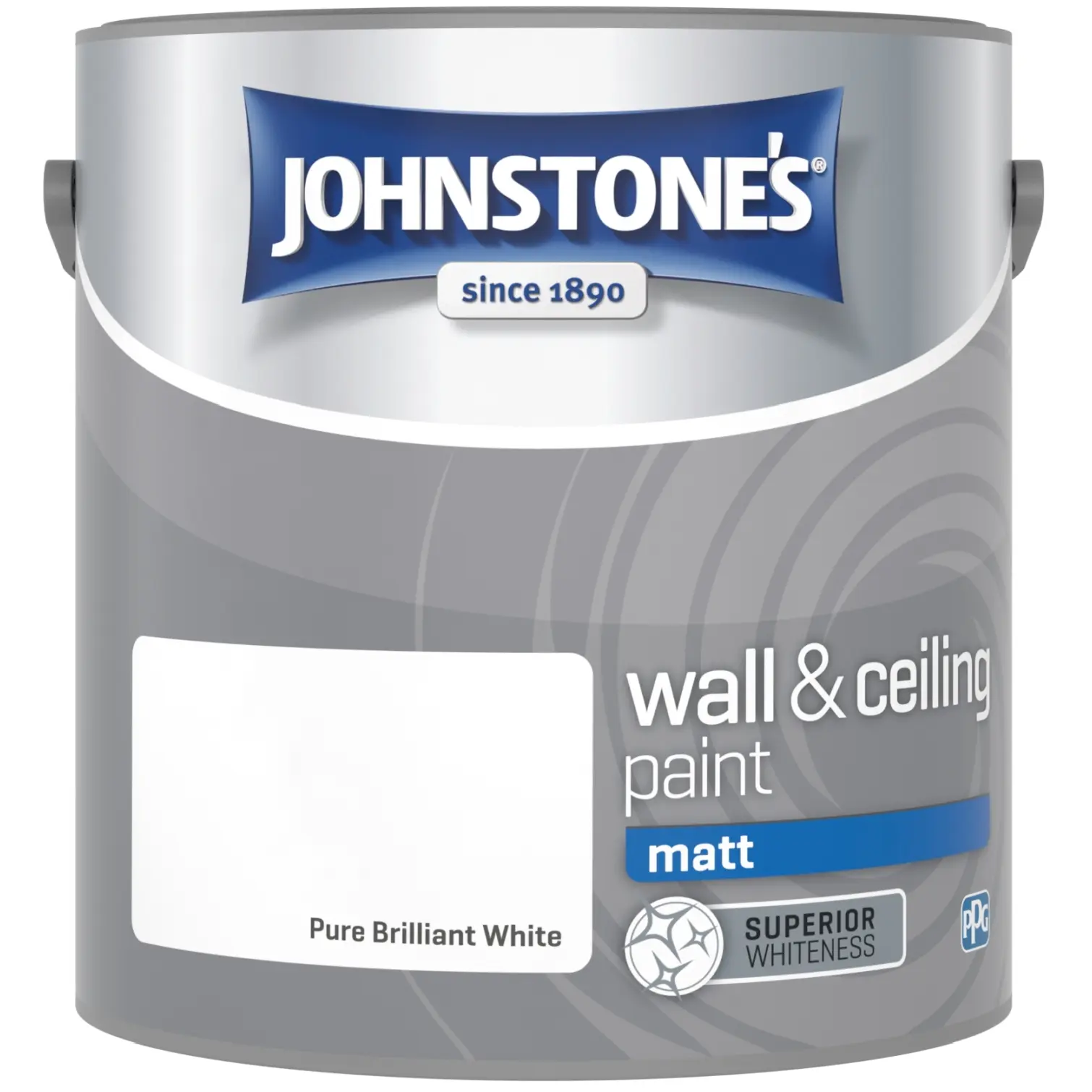
| Matt | None | Living rooms, bedrooms, ceilings | Less wipeable than silk | Johnstones Wall & Ceiling paint Pure Brilliant White Matt 2.5 Litre |
| Silk | Shiny | Hallways, busy family rooms | Shows up bumps and dents | Dulux Silk Pure Brilliant White 5L |
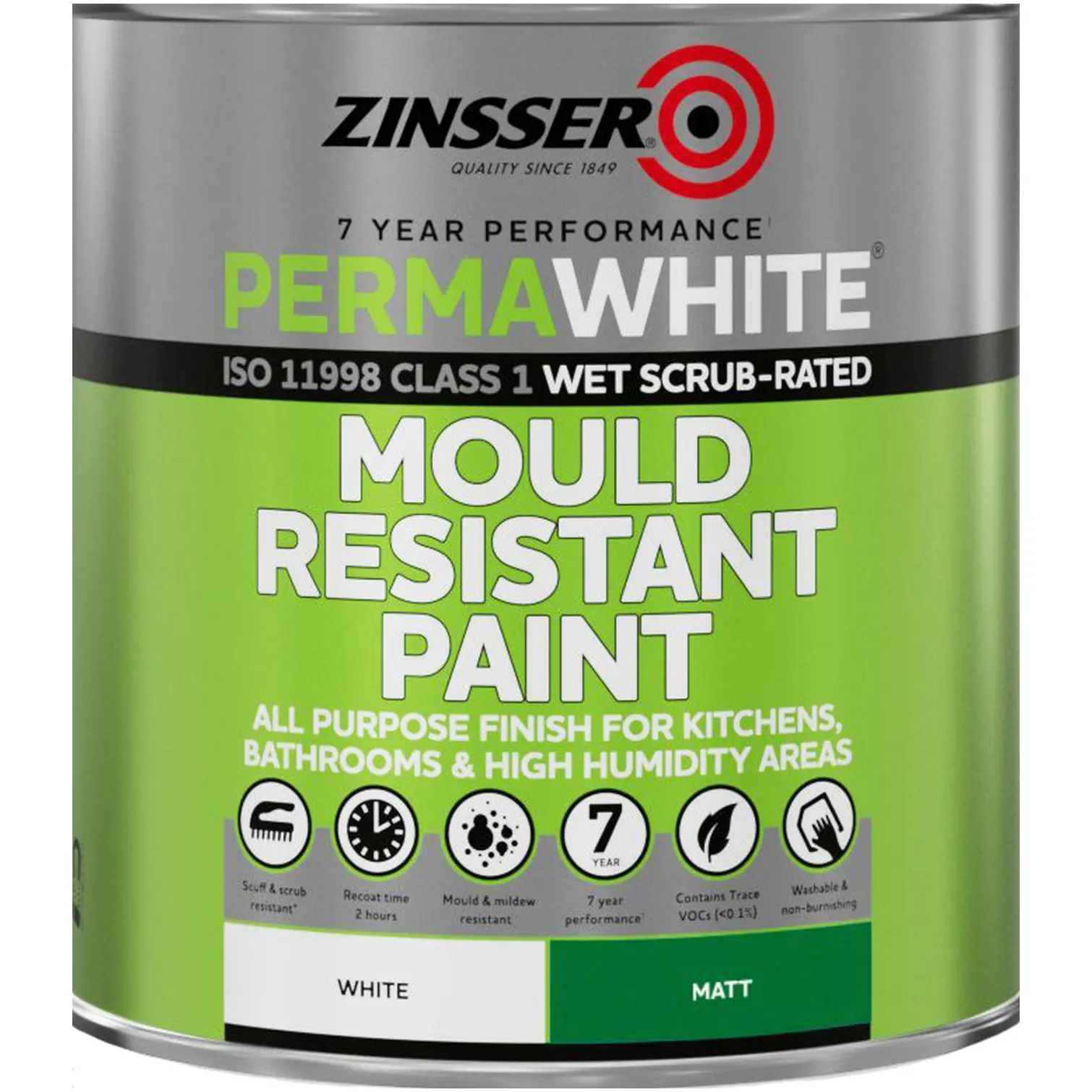
| Kitchen and bathroom | Low to mid | Steamy rooms | Costs more | Zinsser Perma White Mould Resistant Paint Matt 1 Litre |
| Eggshell | Low | Woodwork with a modern look | Shows brush marks if overworked | Dulux Quick Dry Eggshell Pure Brilliant White 2.5L |
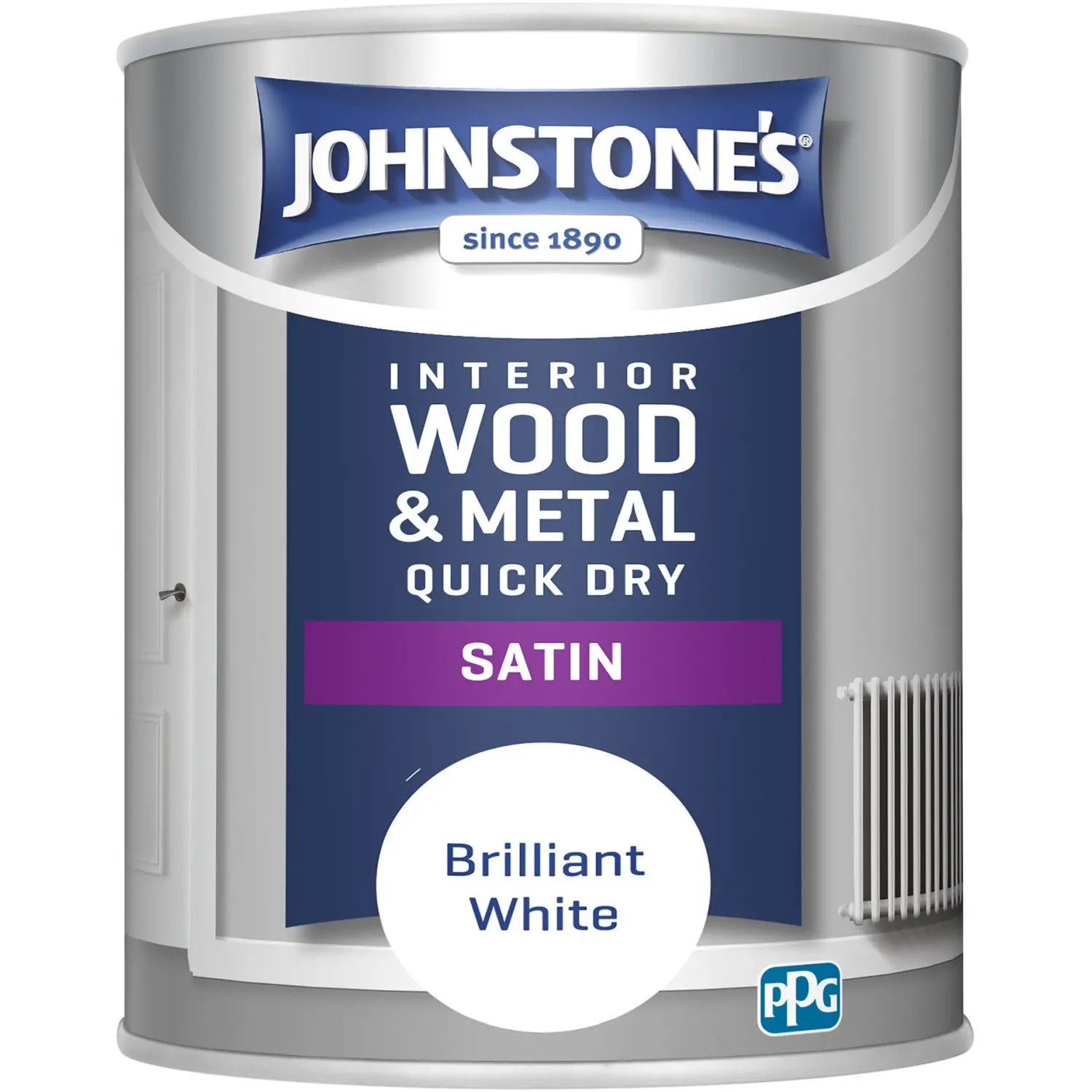
| Satin | Mid | Skirting, doors, frames | Needs a sound surface | Johnstones Satin Brilliant White 750ml |
| Gloss | High | Traditional woodwork | Shows every flaw | Ronseal White Gloss 2 in 1 Primer & Paint |
Best Paint for Walls and Ceilings
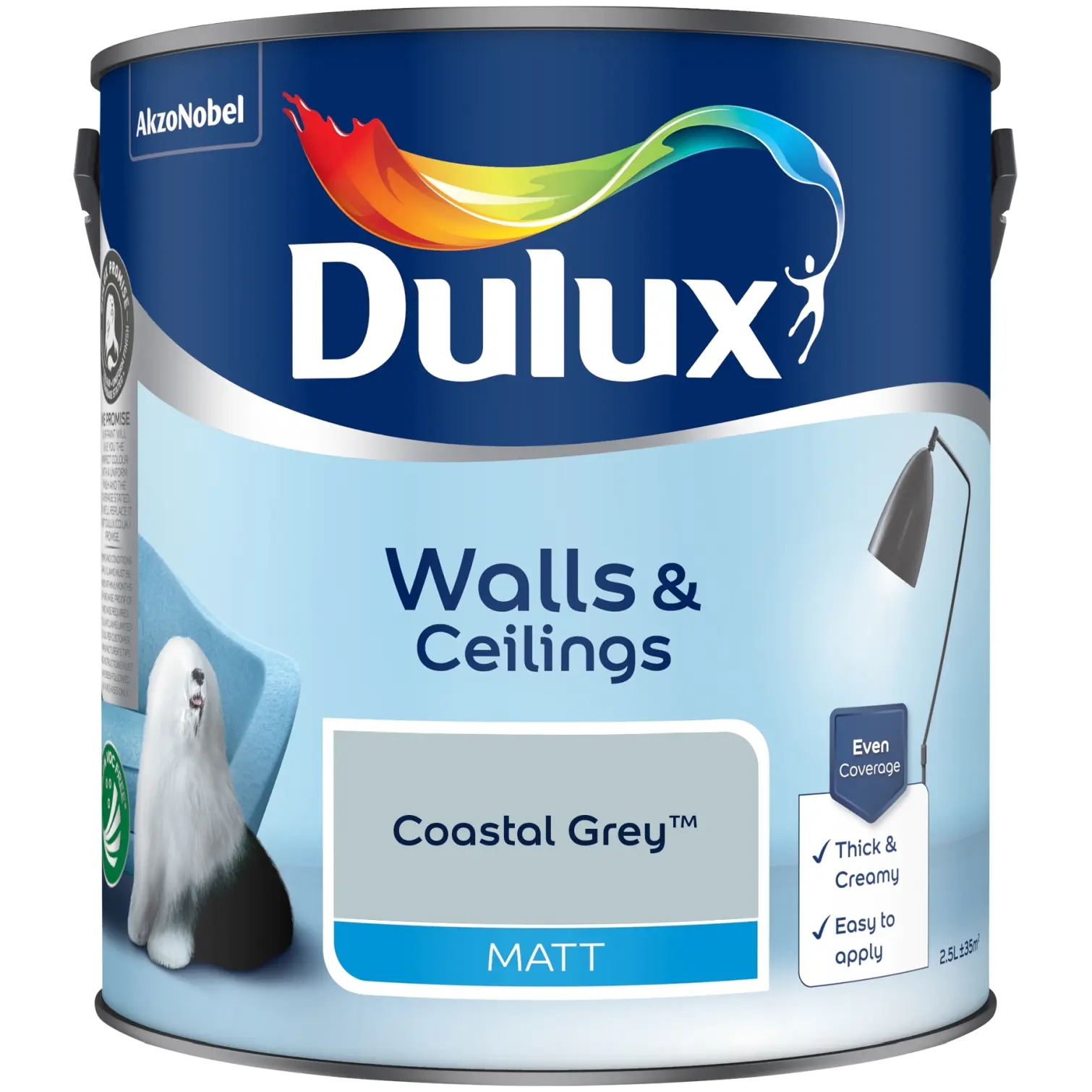
For most rooms, a matt emulsion is the best choice. It hides small imperfections in plaster and gives a soft, modern finish. Johnstones Wall & Ceiling paint Pure Brilliant White Matt 2.5 Litre is made for both walls and ceilings, and for colour, the Dulux matt range includes popular shades like 2.5L Dulux Matt Coastal Grey. Not sure about a colour? Try a Dulux tester pot or a mess-free Ronseal peel and stick tester on two different walls and look at it in daylight and lamplight before committing.
Best Paint for Kitchens and Bathrooms
Steam and condensation make ordinary emulsion peel and go mouldy. Use a paint made for the job. Zinsser Perma White Mould Resistant Paint Matt 1 Litre is a washable, scrubbable matt that resists mould and mildew for up to 7 years, and Dulux makes dedicated bathroom and kitchen paints too. If you’re fighting black mould on the walls, deal with the cause first. Our damp and moisture checklist explains how.
Best Paint for Skirting Boards, Doors and Frames
Woodwork needs a tougher paint than walls. Satin is the most popular choice now: Johnstones Satin Brilliant White 750ml gives a subtle sheen and works on wood and metal, inside and out. For bare or worn interior wood, Ronseal White Gloss 2 in 1 Primer & Paint primes and paints from one tin, with no separate primer needed. Just apply two coats.
How to Prepare Walls for Painting
Preparation is the boring bit, but it’s the bit that matters most. Paint shows every flaw underneath it. Allow at least as long for prep as you do for painting.
1. Clear and Protect the Room
Move furniture into the middle of the room and cover it. A cotton dust sheet is worth the money: it soaks up drips rather than letting them run, and it won’t slide underfoot like plastic. Take down curtains, pictures and shelves, and loosen switch and socket plates so you can paint behind them (turn off the power first). If you’re sanding, a zipped doorway dust protector keeps dust out of the rest of the house.
2. Wash the Walls With Sugar Soap
Walls collect grease, especially in kitchens, hallways and around light switches. Paint won’t stick well to grease. Wipe everything down with Bartoline Ready To Use Sugar Soap 500ml, rinse with clean water and let it dry.
3. Scrape, Fill and Sand
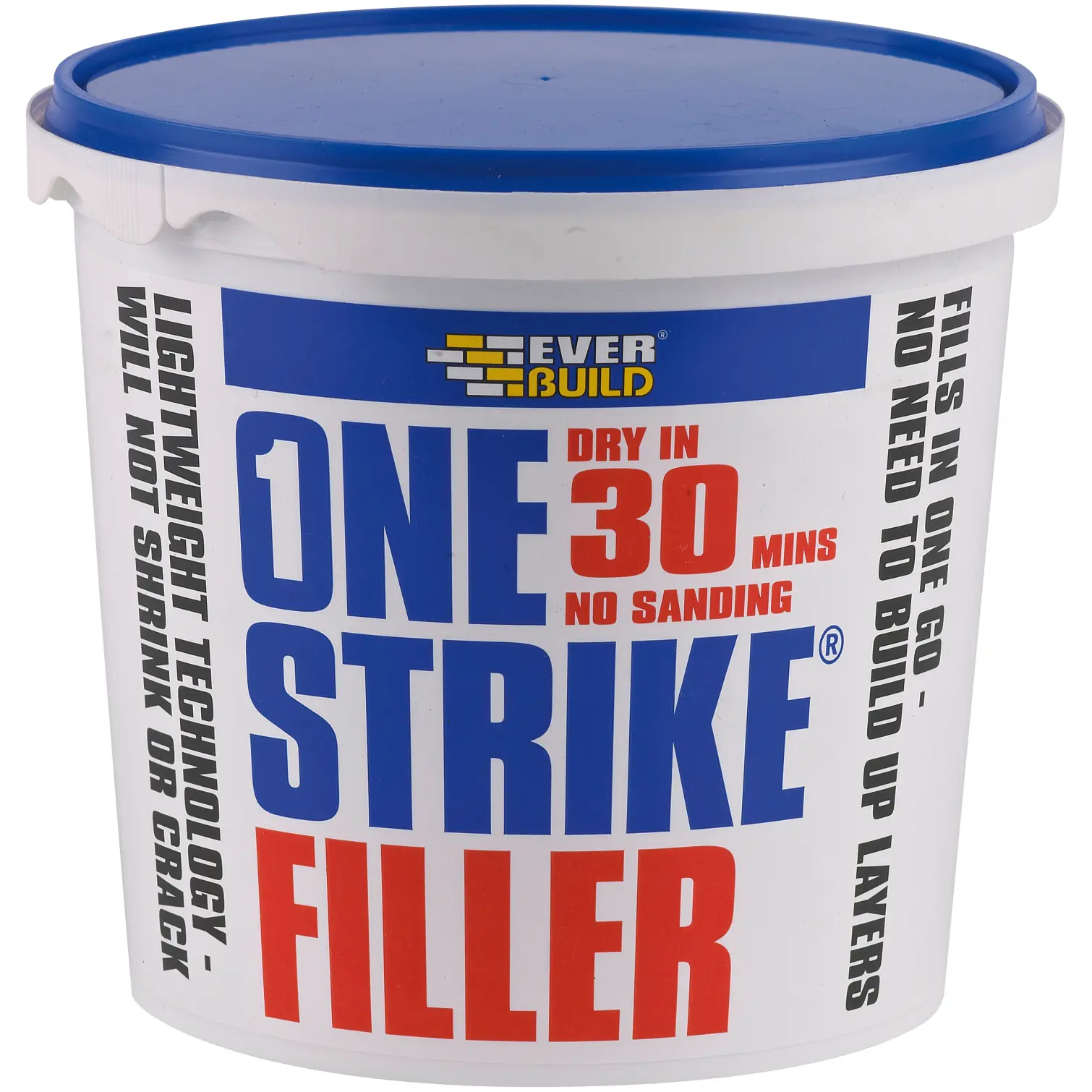
Scrape off any flaking paint with a Stanley 3 piece scraper set. Fill holes and cracks with Everbuild One Strike Filler 450ml, which is ready to paint in about 30 minutes. Run decorators caulk along gaps at the top of skirting boards and around door frames. Once everything’s dry, sand it smooth with a sanding sponge. Our guide to filling and sealing cracks, gaps and holes explains which filler to use for each job.
4. Prime Anything That Needs It
You don’t need to prime walls that are already painted and in good condition. You do need a primer or sealer on:
- Stains. Water marks, nicotine and smoke stains bleed through emulsion however many coats you apply. Seal them first with Zinsser Cover Stain Primer & Sealer Stain Killer 500ml, which can be recoated in two hours, or Zinsser B.I.N. Primer & Sealer Stain Killer 500ml for the most stubborn stains.
- Patches of filler. Spot-prime them or give them a thinned coat of emulsion so they don’t show through as dull patches.
- New plaster. Apply a mist coat: a basic matt emulsion thinned with water as the tin directs. Avoid vinyl or wipeable paints for this first coat, as they can peel off fresh plaster.
- Bare wood. Use Dulux Quick Drying Wood Primer Undercoat 750ml, which is dry in 2 hours.
- Chalky or flaky surfaces. Zinsser Gardz Clear 1Ltr soaks in and binds them into a firm surface for painting.
5. Mask the Edges
Tape off anything you don’t want painted: window glass, light switches, the edge of the ceiling if you’re using a different colour. Frog Tape Multi-Surface 24mmx 55m has a paint-block edge to stop bleed and gives the sharpest lines. Rhino masking tape is a good budget option for protecting larger areas. Peel tape off while the last coat is still slightly wet for a clean line.
Best Roller for Emulsion
A roller does most of the work on a wall, so it’s worth understanding what you’re buying.
Roller Size
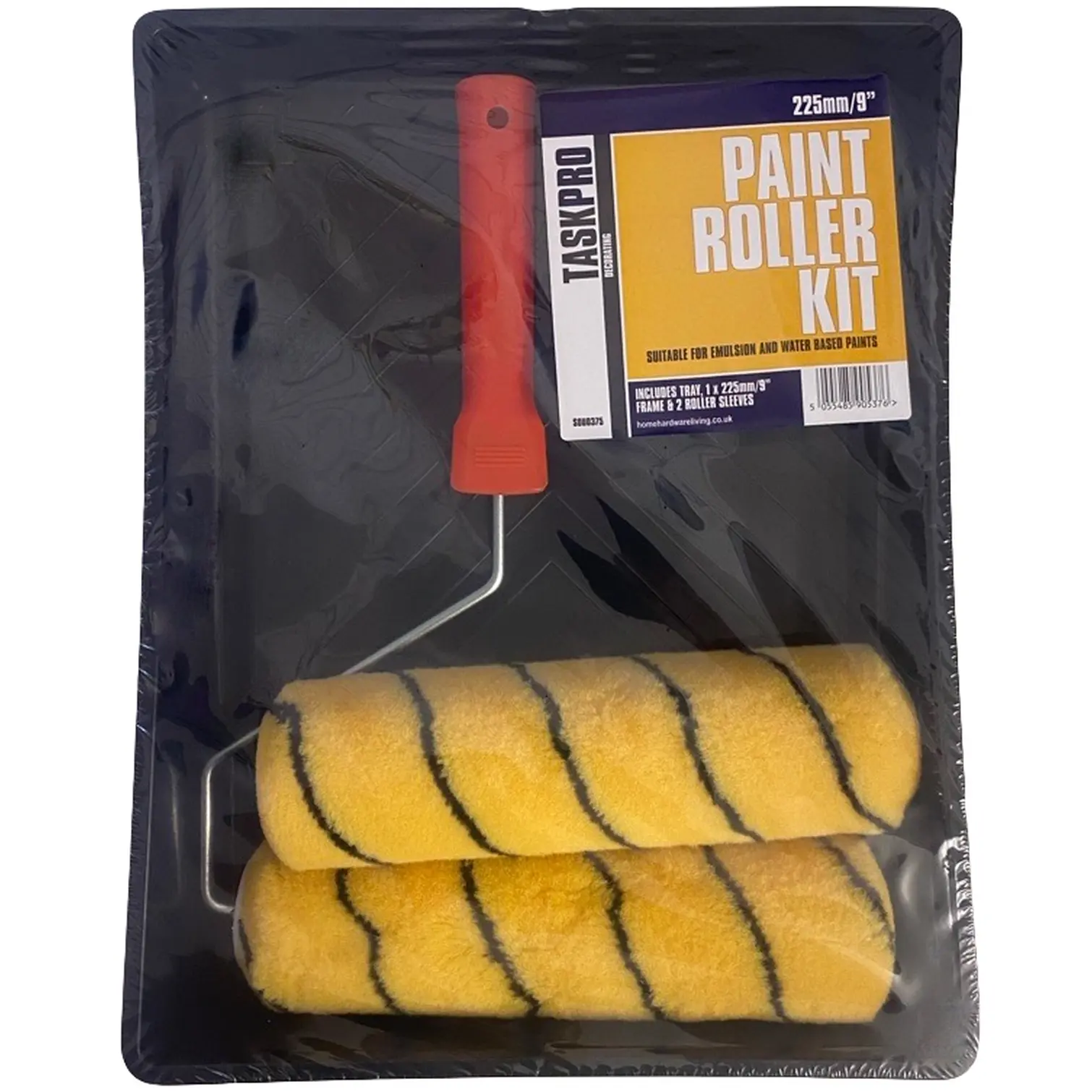
A 9 inch (230mm) roller is the standard for walls and ceilings. The Taskpro 9 inch roller and tray set comes with two sleeves. For doors, narrow walls and patching, a 4 inch mini roller set gives more control. For the wall behind a radiator, a long-handled radiator roller reaches where nothing else will.
Roller Sleeve Pile
- Short pile: smooth surfaces and a fine finish. Uses less paint.
- Medium pile: the all-rounder for most emulsion on standard plastered walls.
- Long pile: textured walls, artex and rough surfaces.
- Foam: best for gloss and satin on flat doors, not for emulsion on walls, as it can leave bubbles.
Use a fresh sleeve for each colour. A triple pack of roller refills is cheaper than buying them one at a time.
Do You Need an Extension Pole?
For ceilings, yes. A Coral telescopic extension pole lets you paint the whole ceiling from the floor, with more even pressure and less time going up and down a ladder.
Paint Brushes for Cutting In
Cutting in means painting a neat edge along ceilings, corners, skirting and around switches, where a roller can’t reach. It’s the skill that makes or breaks a paint job.
Which Brush to Use
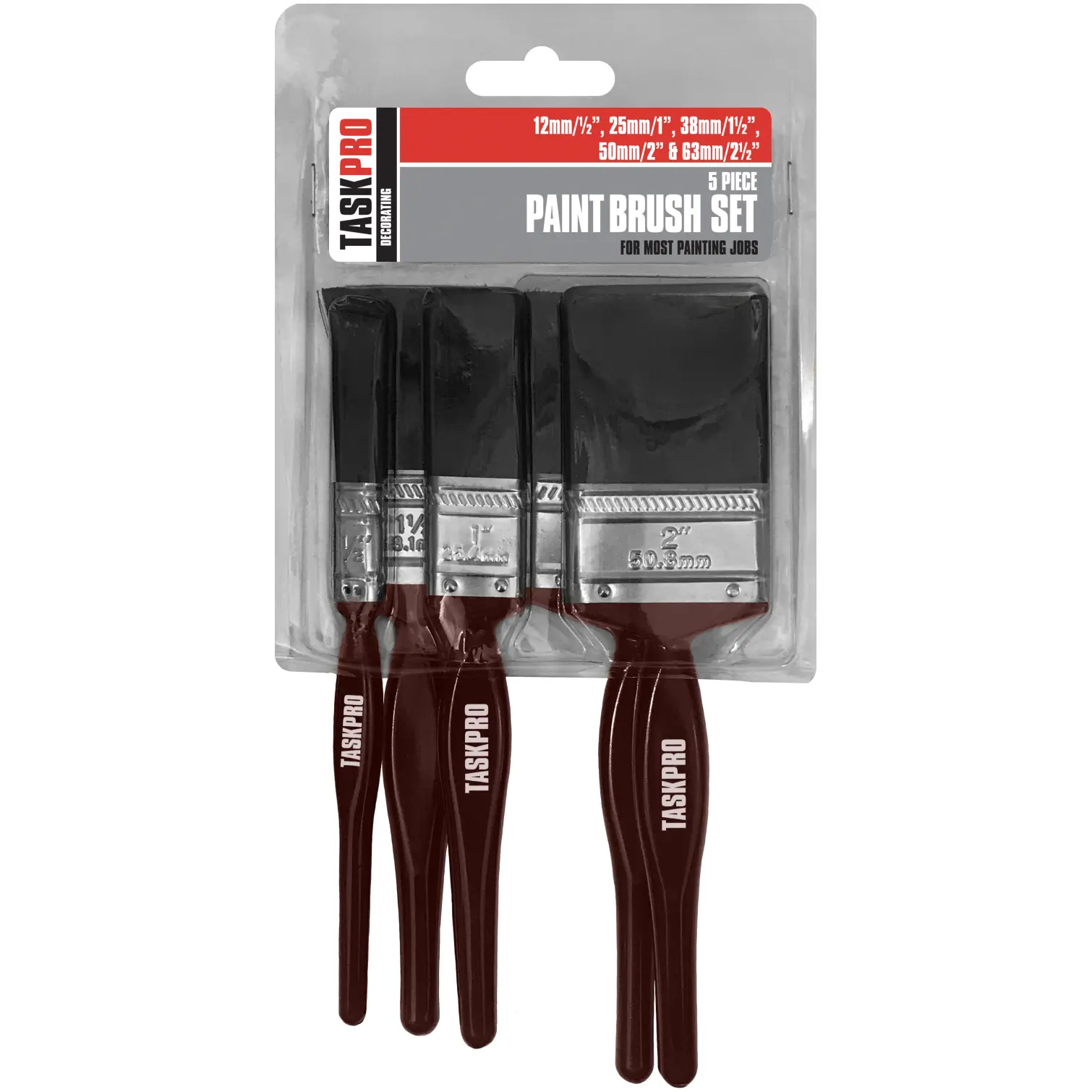
Use a 1.5 to 2 inch brush for cutting in. Synthetic bristles like the synthetic 2 inch brush are best with water-based emulsions, as they hold their shape and don’t go floppy. A 5 piece brush set gives you every size for walls and woodwork. For the narrow gap behind radiators, a Coral radiator brush reaches the back.
How to Cut In Neatly
- Pour a little paint into a paint kettle rather than dipping into the tin.
- Dip only the bottom third of the bristles and tap off the excess.
- Start a few millimetres away from the edge, then press gently so the bristles fan out and carry the paint into the corner.
- Draw the brush along in one long, steady stroke.
- Cut in one wall at a time, then roll it straight away while the edge is still wet. This avoids visible lines where brush meets roller.
How to Paint a Room: Step by Step
Most decorators work from the top down, so drips land on surfaces you haven’t painted yet.
- Ceiling first. Cut in around the edges, then roll in strips across the shortest width of the room.
- Walls next. Cut in one wall, then roll it. Work in sections of about a metre wide, rolling in a loose W shape then filling it in, and keep a wet edge so you don’t get lap marks.
- Second coat. Leave the first coat to dry fully. The tin will tell you how long, and it’s usually a few hours for emulsion. Most walls need two coats, especially with a colour change.
- Woodwork last. Sand lightly, wipe off the dust, then paint skirting, door frames and doors. Painting them last means wall paint on the woodwork gets covered.
- Remove the tape and put the room back together.
Painting Woodwork: Skirting, Doors and Frames
Woodwork gets knocked, scuffed and cleaned more than walls, so it needs proper prep.
- Clean with sugar soap to remove grease and fingerprints.
- Sand existing gloss to take the shine off, so the new paint grips. A shavehook gets flaking paint out of mouldings.
- Fill dents with a wood filler and caulk the gap along the top of the skirting.
- Prime bare wood with Dulux Quick Drying Wood Primer Undercoat 750ml, or use Ronseal White Gloss 2 in 1 Primer & Paint, which doesn’t need a separate primer.
- Paint in thin coats, following the grain. Thick coats run and sag.
Use Johnstones Satin Brilliant White 750ml or Dulux Quick Dry Eggshell Pure Brilliant White 2.5L, which is touch dry in an hour, for a modern satin or eggshell finish.
Painting Over Wallpaper
You can paint over wallpaper if it’s firmly stuck down, but the results aren’t always great, and it makes the paper much harder to strip later. If the paper is loose, bubbled or peeling, strip it. A Black+Decker electric wallpaper stripper steams it off far faster than scraping, and Bartoline wallpaper stripper helps with stubborn paper. Fill and sand the plaster underneath before painting.
Cleaning Up
Good brushes and rollers last for years if you clean them properly.
- Water-based paint: wash in warm soapy water until the water runs clear.
- Oil-based paint: use Bartoline brush cleaner or white spirit, then wash in warm water.
- Hands, tools and spills: Everbuild Wonder Wipes (100) remove wet paint, sealant and adhesive.
- Taking a break? Wrap brushes and rollers tightly in cling film or a plastic bag and they’ll stay wet for a few hours.
Common Decorating Mistakes to Avoid
- Skipping the prep. Paint doesn’t hide holes, cracks or grease. It shows them up.
- Painting over stains. Water and smoke stains bleed through. Seal them first.
- Overloading the roller. It causes drips, splatter and thick edges.
- Letting edges dry. Cut in and roll one wall at a time to avoid visible lines.
- Rushing the second coat. Painting on a tacky first coat drags it off and leaves a patchy finish.
- Cheap tape left on too long. It can pull paint off or leave residue. Remove it while the paint is still slightly wet.
Our Recommendation
- Best all-round wall paint: Johnstones Wall & Ceiling paint Pure Brilliant White Matt 2.5 Litre for walls and ceilings.
- For steamy rooms: Zinsser Perma White Mould Resistant Paint Matt 1 Litre.
- For woodwork: Johnstones Satin Brilliant White 750ml, or Ronseal White Gloss 2 in 1 Primer & Paint on bare wood.
- Tools worth spending a bit more on: Frog Tape Multi-Surface 24mmx 55m, a cotton dust sheet and a telescopic extension pole.
- Don’t skip: Bartoline Ready To Use Sugar Soap 500ml, Everbuild One Strike Filler 450ml and Polycell Decorators Caulk 290ml.
Frequently Asked Questions
Should you paint the walls or the ceiling first?
Paint the ceiling first. Work from the top down so any drips or splatter land on surfaces you haven’t painted yet. Then do the walls, and finish with the woodwork.
Do I need to prime walls before painting?
Not if they’re already painted and in good condition. You do need a primer or sealer on new plaster (use a thinned mist coat), on stains such as water marks or smoke, on bare wood, and on chalky or flaky surfaces. Spot-prime patches of filler too.
How many coats of paint does a wall need?
Usually two. One coat rarely gives an even finish, and a big colour change, especially from dark to light, may need three. Let each coat dry fully, following the drying time on the tin.
What is the best roller for emulsion?
A 9 inch roller with a medium pile sleeve suits most emulsion on standard plastered walls. Use a short pile for very smooth surfaces and a long pile for textured walls. Foam rollers are better for gloss on flat doors than for emulsion.
What size brush is best for cutting in?
A 1.5 to 2 inch brush is easiest to control. For water-based emulsion, choose synthetic bristles, which hold their shape and give a cleaner edge.
How do I stop paint bleeding under masking tape?
Use a good quality decorating tape, press the edge down firmly with a fingernail or filling knife, and don’t overload the brush near the tape. Remove the tape while the final coat is still slightly wet, pulling it back at an angle.
Related Reading
Shop Decorating Essentials
Browse more: White Emulsion, Colour Emulsion, Kitchen & Bathroom Emulsion, Interior Satin, Primers, Rollers & Trays, Paint Brushes, Decorating Tapes, Decorating Sundries and Testers. Order online for home delivery or Click & Collect from your nearest Home Hardware store.