
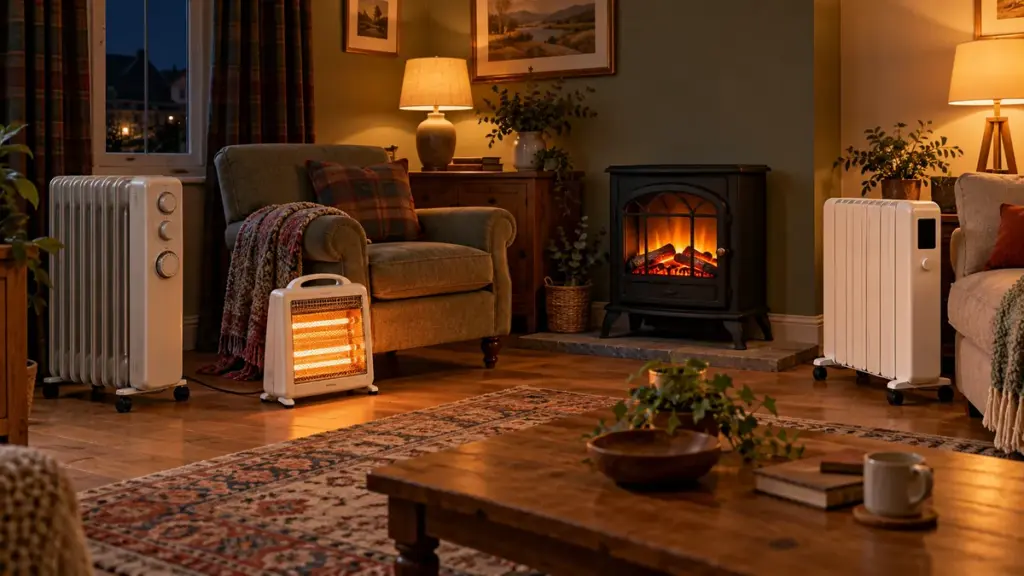
Every winter, the same question: which electric heater is cheapest to run? The honest answer surprises most people. Almost every electric heater turns nearly all the electricity it uses into heat. A 2kW fan heater and a 2kW oil-filled radiator cost exactly the same per hour at full power.
What makes one heater cheaper than another is how much power it draws, how well it controls itself, and whether it heats the space you actually need. This guide explains the different types, works out real running costs, and helps you choose the right heater for each room. Everything we mention is in stock online, and you can order it for Click & Collect from your local Home Hardware store.
Quick Answer: Which Heater Is Cheapest to Run?
- Cheapest to warm just you: a low-wattage halogen or quartz heater, like the 800W quartz heater, pointed at where you’re sitting.
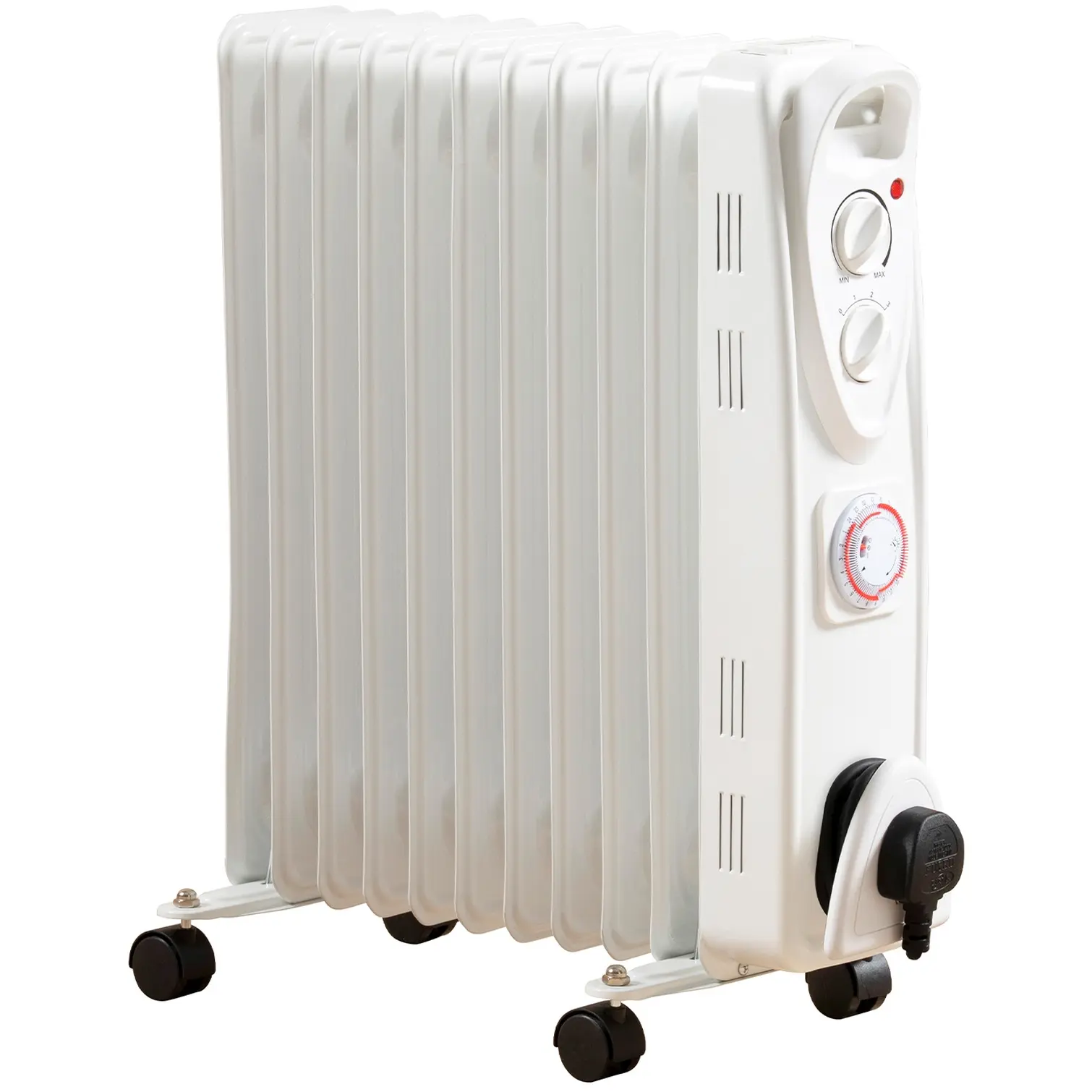
- Cheapest to keep a room warm for hours: an oil-filled radiator with a thermostat, like the Daewoo 1.5kW oil-filled heater with timer. Once the room is warm, the thermostat cuts the power back.
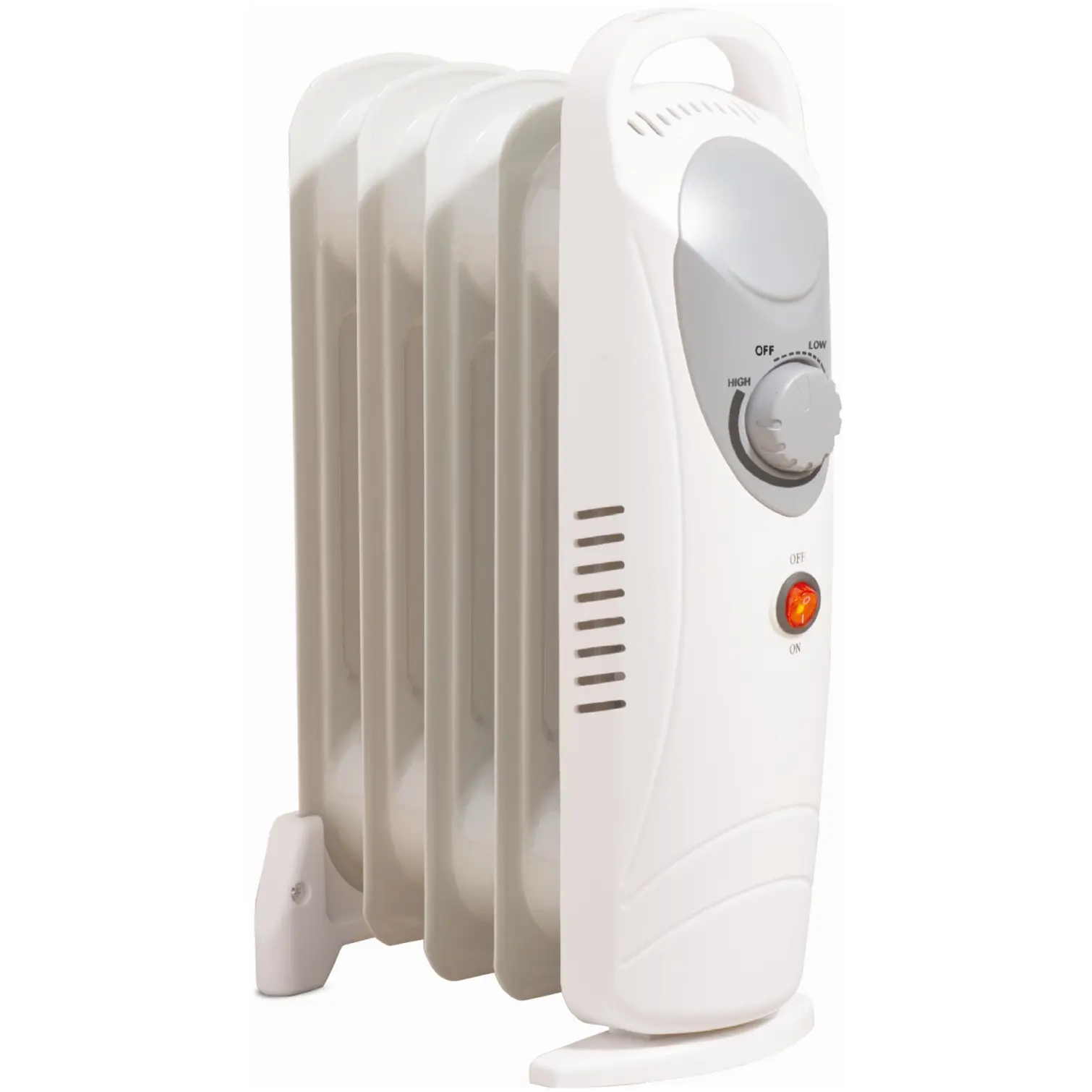
- Cheapest for small rooms: the Daewoo 650W mini oil-filled heater.
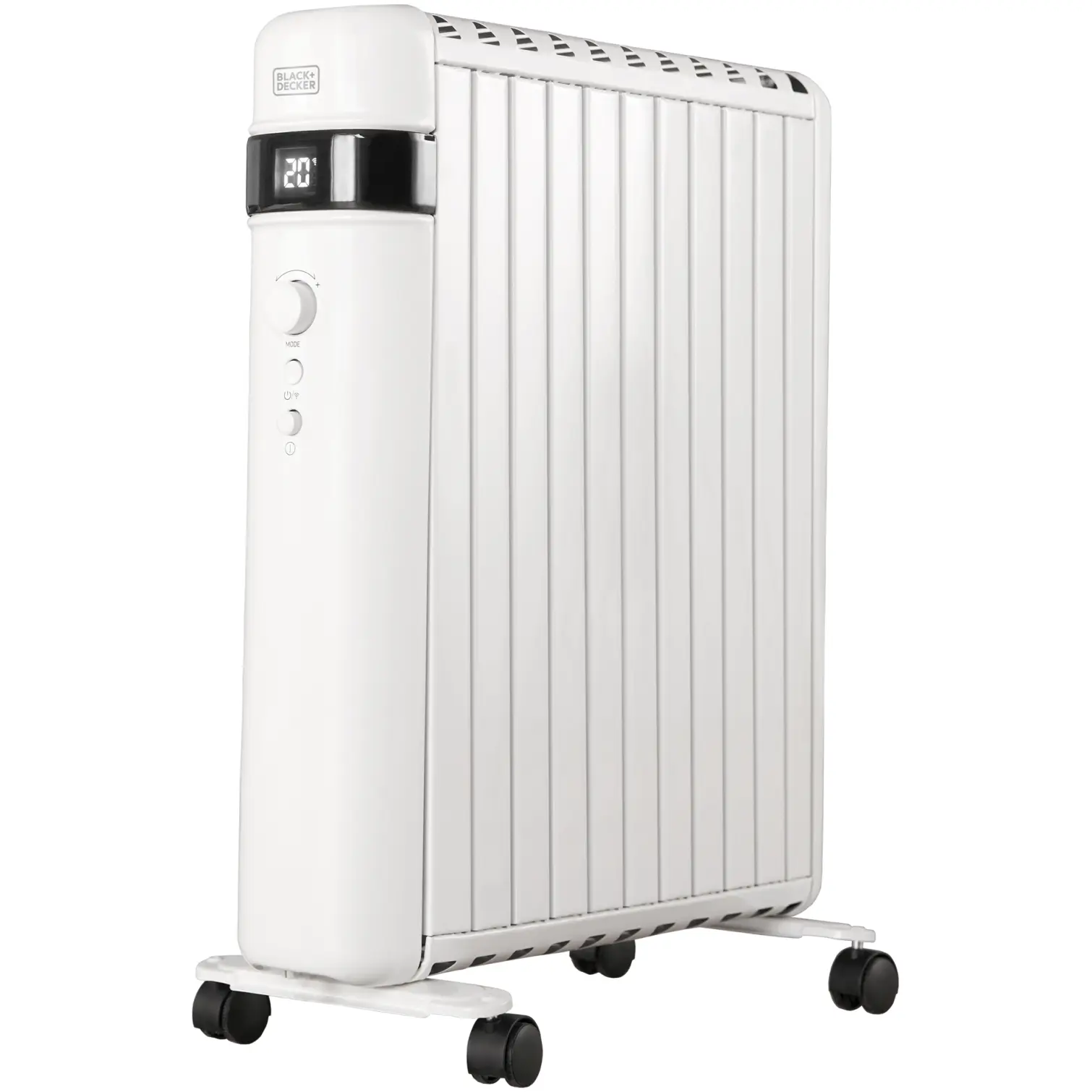
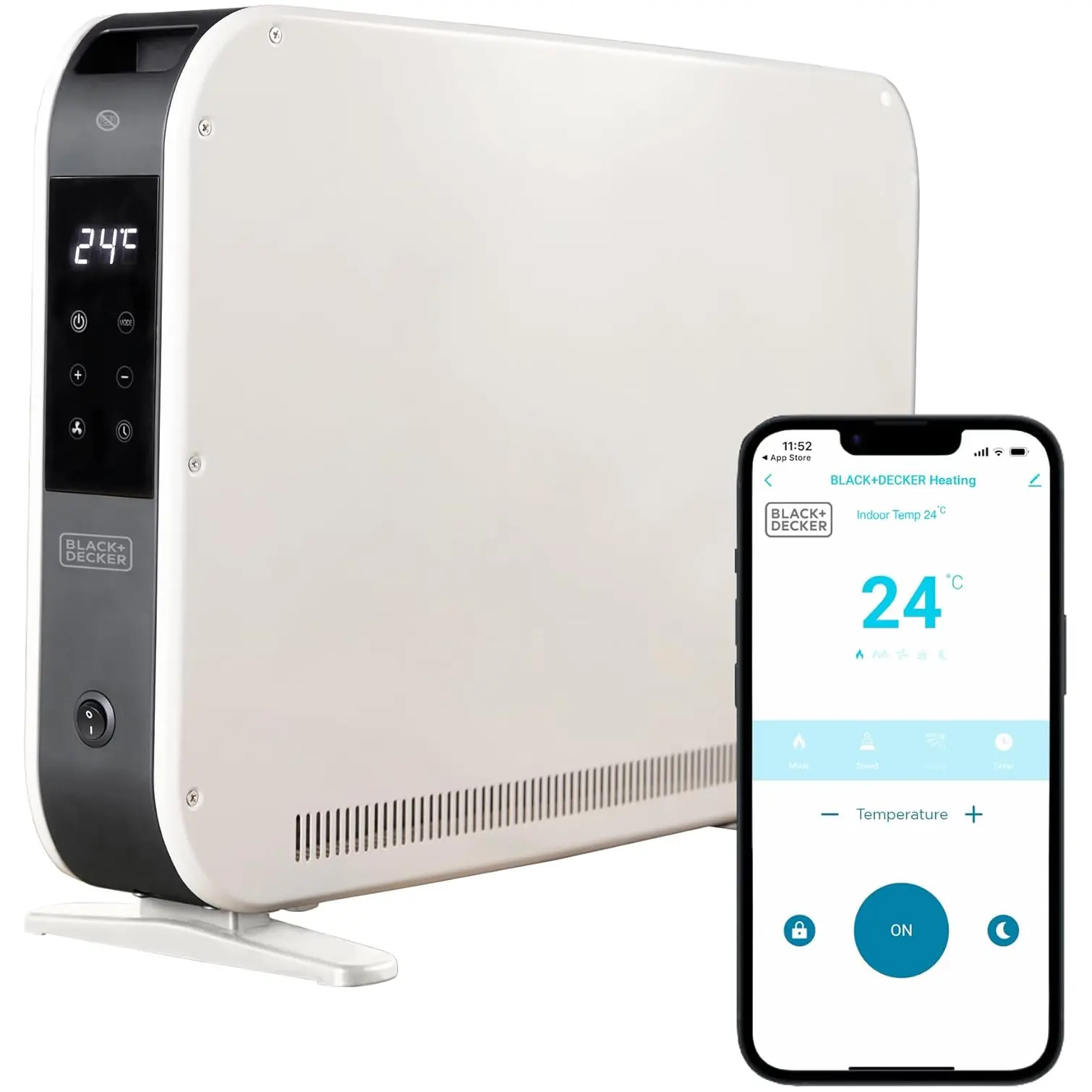
- Cheapest to control: a smart heater you can schedule from your phone, like the Black+Decker smart oil-free radiator, so it’s never on when nobody’s there.
- Most expensive habit: a 3kW fan heater left running all evening.
Are Some Electric Heaters More Efficient Than Others?
Not really, and this is the most important thing to understand. Electric heaters are close to 100% efficient at turning electricity into heat. There’s no such thing as a “more efficient” 2kW heater that gives you more heat for the same electricity.
The differences are in how the heat reaches you and how much electricity the heater ends up using:
- Wattage: a 1kW heater costs half as much per hour as a 2kW heater.
- Thermostat: a heater with a thermostat switches itself down once the room reaches temperature. One without just keeps going.
- Timer: heating the room before you get in, then switching off, beats leaving it on all day.
- Heating the right thing: warming yourself with a radiant heater uses far less energy than heating a whole cold room.
How to Work Out What a Heater Costs to Run
It’s simple maths. Multiply the heater’s power in kilowatts (kW) by the hours you use it, then by the price you pay per unit (kWh) of electricity. You’ll find your unit rate on your energy bill or app.
Power (kW) × hours × unit rate = cost
For example, a 2kW heater on full for 3 hours, at 25p per kWh: 2 × 3 × 25p = £1.50.
| Heater | Power | Cost per hour at full power* |
|---|---|---|
| Warmlight WL42006 Quartz Tube Heater 800W | 0.8kW | about 20p |
| Daewoo 650W Mini Oil Filled Heater Variable Thermostat | 0.65kW | about 16p |
| Warmlite Halogen Heater 1200W | 1.2kW | about 30p |
| Daewoo 1.5KW Oil Filled Heater With Timer and 3 Heat Settings | 1.5kW | about 38p |
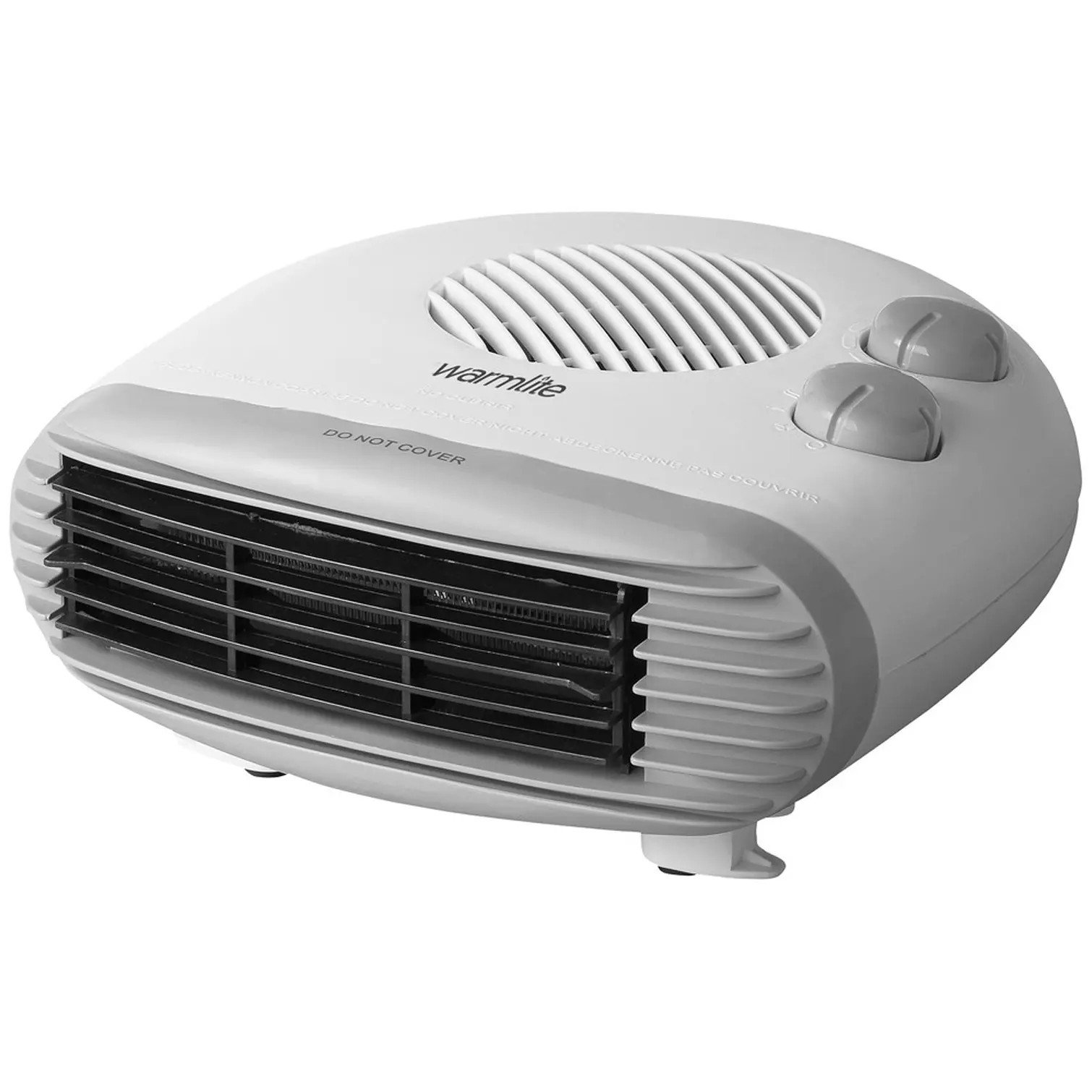
| Warmlite Flat Fan Heater 2kw | 2kW (1kW low setting) | about 50p (25p on low) |
| Black+Decker BXCV41014GB Smart Convector Heater 2.2kw | 2.2kW | about 55p |
| Daewoo 2500W Oil Filled Heater With Timer and 3 Heat Settings | 2.5kW | about 63p |
| Black+Decker Flat Fan Heater 3kw | 3kW | about 75p |
*Worked out at an example rate of 25p per kWh. Check your bill for your actual rate. These figures are at full power. With a thermostat, real running costs are lower, because the heater cycles on and off once the room is warm.
Is an Electric Heater Cheaper Than Central Heating?
Per unit of heat, usually not. Electricity typically costs a lot more per kWh than mains gas. Where a portable heater saves money is when it lets you turn the central heating down and only heat the one room you’re using. If you’re in the living room all evening, heating that room with a heater is often cheaper than heating the whole house.
The Different Types of Electric Heater
| Type | How it heats | Best for | Downsides | Our pick |
|---|---|---|---|---|
| Halogen / quartz | Radiant heat that warms you directly, like sunshine | Warming yourself in one spot, fast | Barely warms the room itself | Warmlight WL42006 Quartz Tube Heater 800W |
| Fan heater | Blows air over a hot element | A quick blast of heat in a small room | Noisy, high wattage, heat drops off when it stops | Warmlite Flat Fan Heater 2kw |
| Convector heater | Warms the air, which circulates round the room | Heating a whole room evenly | Slower to feel than a fan | Daewoo Convector Heater With Timer and 3 Heat Settings |
| Oil-filled radiator | Heats oil inside the fins, which holds and releases heat | Long, steady, quiet heat in bedrooms and living rooms | Slow to warm up, heavy | Daewoo 1.5KW Oil Filled Heater With Timer and 3 Heat Settings |
| Oil-free radiator | Radiator style without the oil | Radiator-style heat that warms up faster | Higher price | Black+Decker Smart Digital Oil Free Radiator 1.5kw |
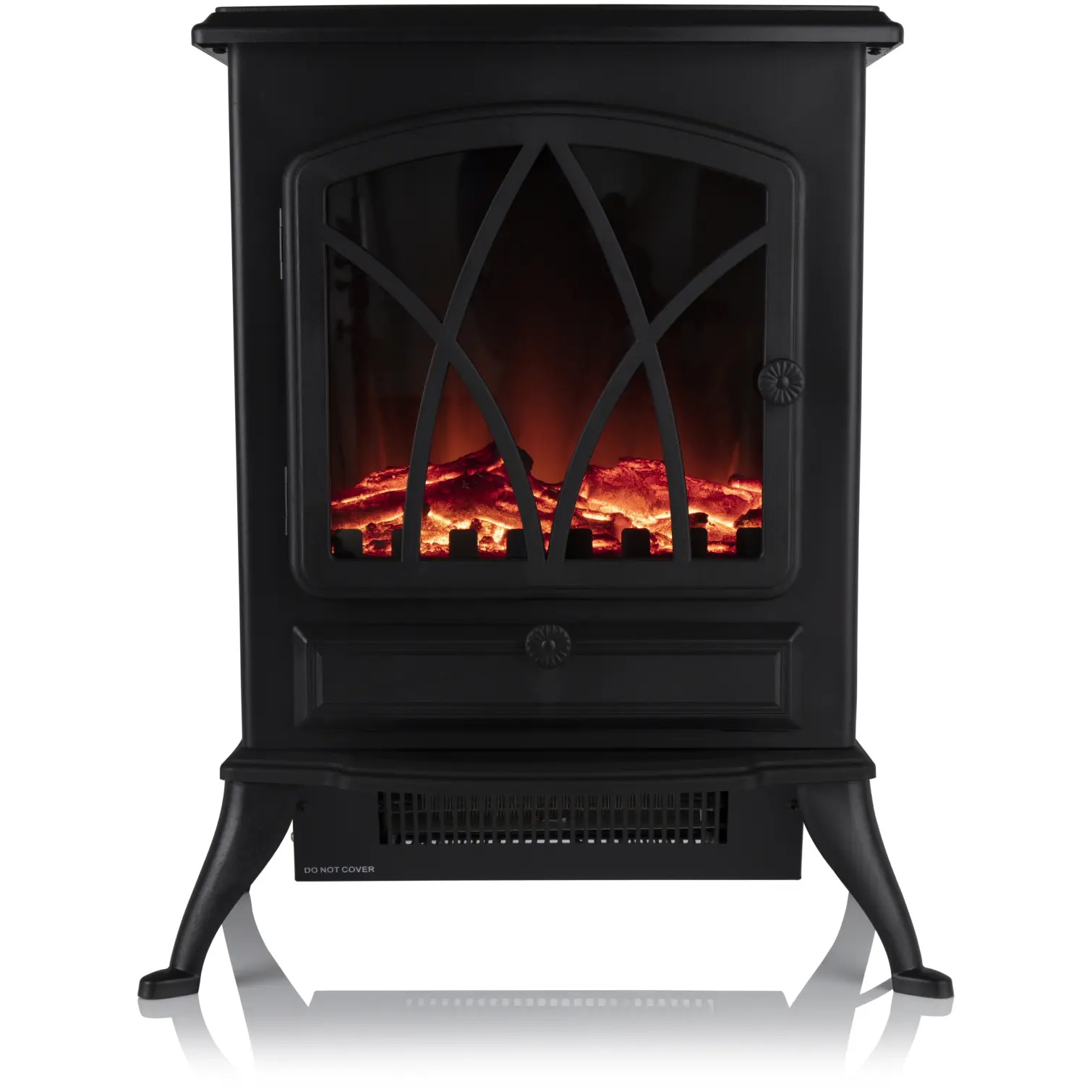
| Electric fire or stove | Heater with a flame effect | A cosy focal point plus heat | Higher price | Warmlite Electric Stove |
Halogen and Quartz Heaters: Cheapest for Warming You
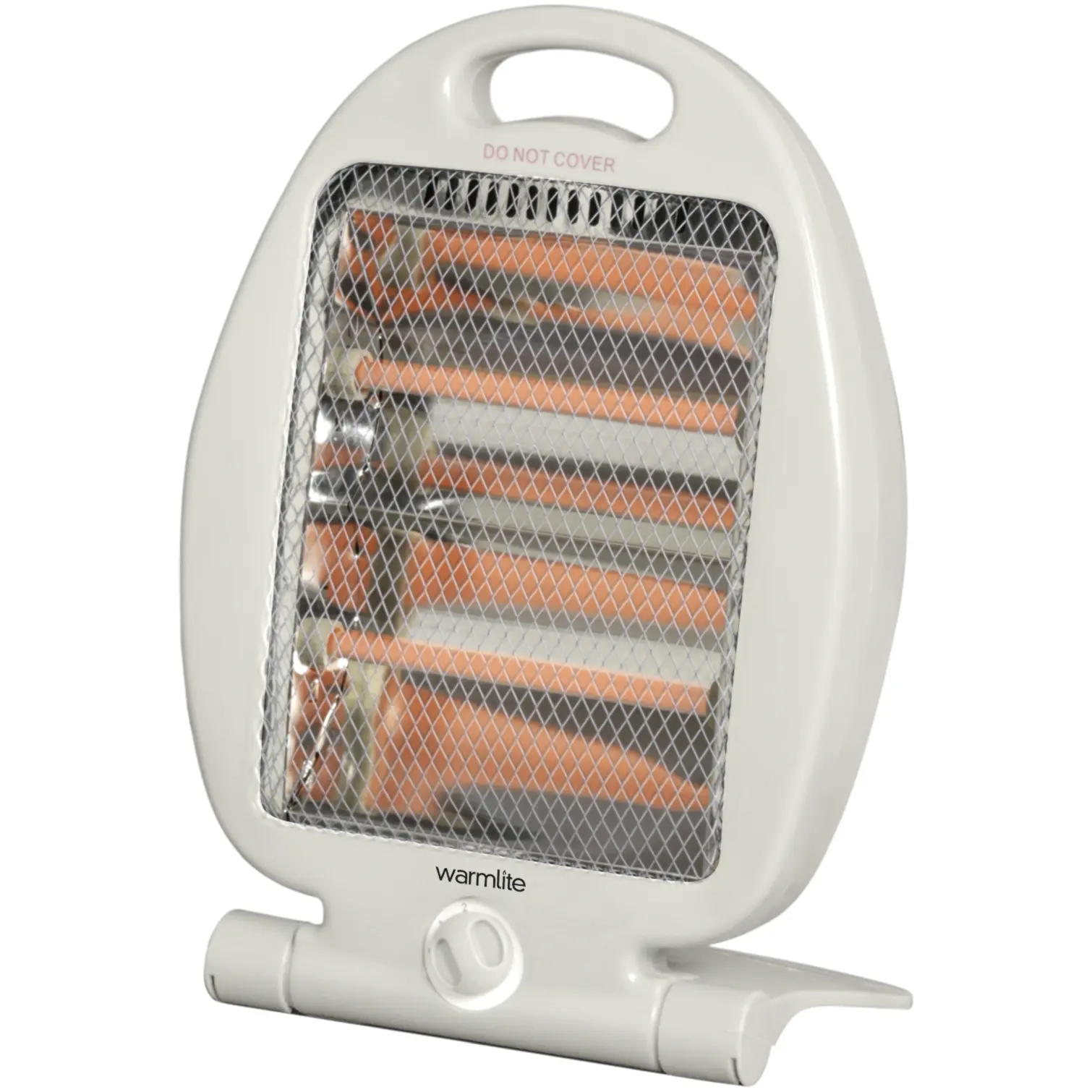
Radiant heaters work like the sun. They warm the person or object in front of them, not the air. That makes them instant and cheap for warming yourself while you sit at a desk or on the sofa, but they don’t do much for the room overall. The Warmlight 800W quartz tube heater and the Warmlite 1200W halogen heater are both low-wattage choices.
Fan Heaters: Fast but Thirsty
Fan heaters blow air over a hot element, so you feel the heat almost straight away. They’re cheap to buy, but they’re usually 2 to 3kW, and the warmth disappears soon after you switch them off. Use them for short bursts. The Warmlite 2kW flat fan heater has a 1kW setting, an adjustable thermostat, overheat protection and a tip-over switch. The Black+Decker 3kW flat fan heater warms a room very quickly but costs the most per hour.
Convector Heaters: Best for Heating a Whole Room
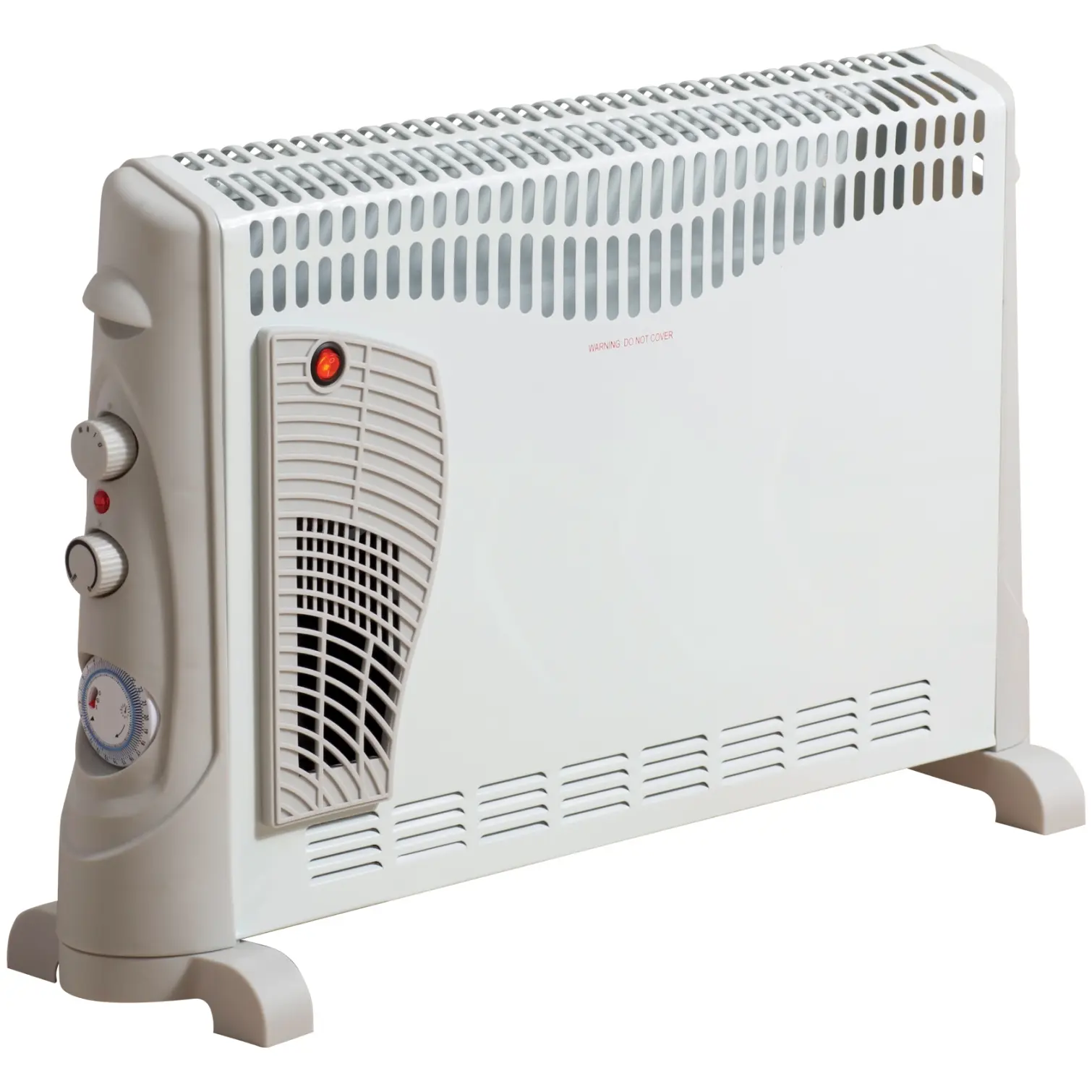
Convectors warm the air, which then rises and circulates round the room. They’re good for heating a room evenly, especially a well-insulated one. The Daewoo convector heater has three heat settings, a thermostat and a timer. The Black+Decker 2kW convection heater adds tip-over and overheat protection. The Black+Decker smart convector heater lets you set the temperature, timers and modes from your phone.
Oil-Filled Radiators: Best for Steady, Quiet Heat
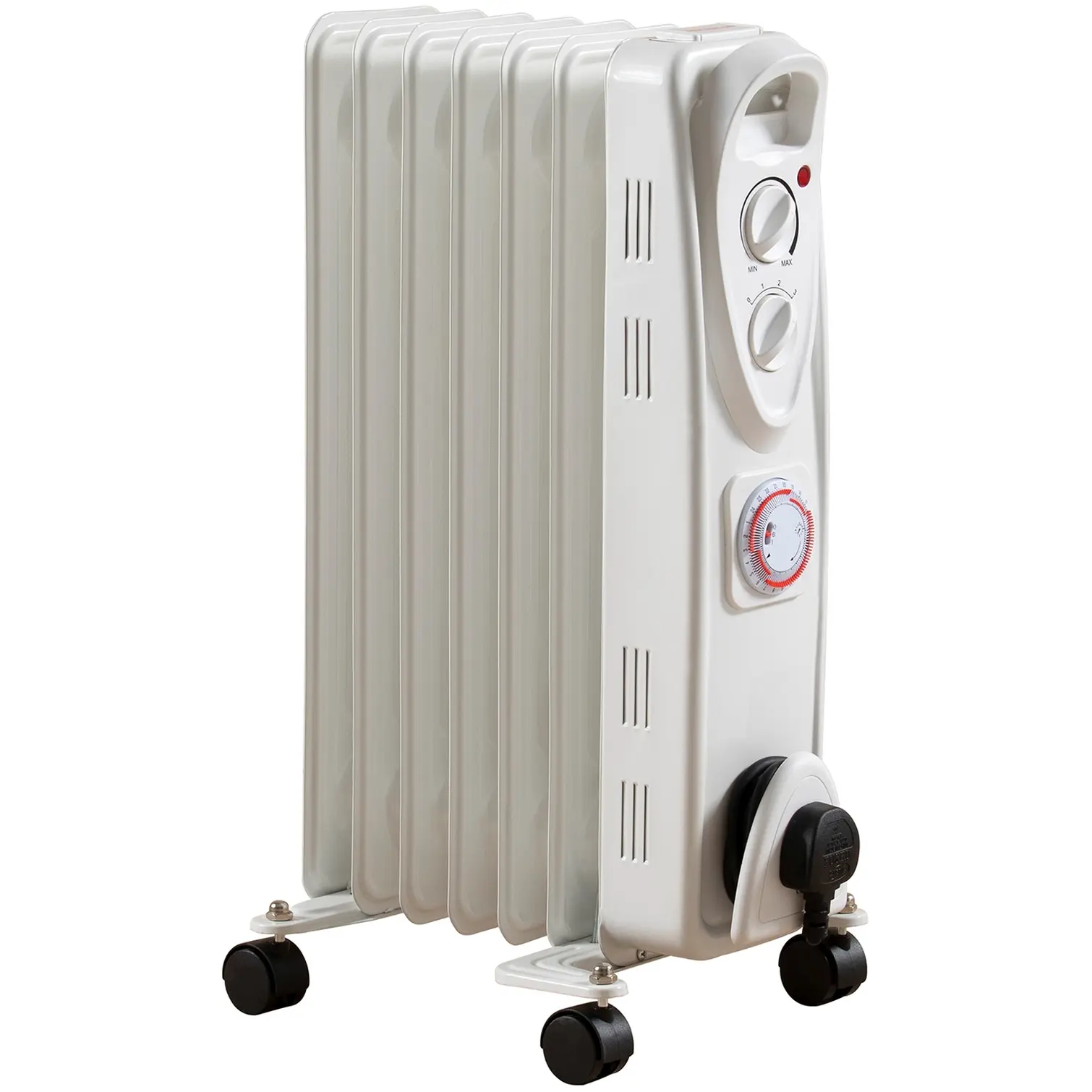
Oil-filled radiators heat the oil sealed inside their fins, which then gives off heat steadily, even after the heater cycles off. They’re slow to warm up, but they’re silent and give a gentle, even warmth that suits bedrooms and evenings in. With the thermostat set sensibly, they’re one of the cheapest ways to keep a room comfortable for hours.
- Small rooms: Daewoo 650W Mini Oil Filled Heater Variable Thermostat, with a variable thermostat and overheat protection.
- Medium rooms: Daewoo 1.5KW Oil Filled Heater With Timer and 3 Heat Settings with seven fins, three heat settings and a timer.
- Larger rooms: Daewoo 2500W Oil Filled Heater With Timer and 3 Heat Settings with eleven fins.
Oil-Free and Smart Radiators: Heat on Your Schedule
The Black+Decker smart oil-free radiator 1.5kW gives radiator-style heat with a 24 hour programmable timer and control from the Black+Decker Home app, Amazon Alexa or Google Home. The 2.5kW version has three heat settings (1250W, 2000W and 2500W) and a thermostat from 5 to 35°C. Being able to schedule the heat, or switch it off from your phone if you’re out, is where real savings come from.
Electric Fires and Stoves: Heat With a Focal Point
If you want the look of a fire without a chimney, an electric stove gives you a cosy focal point and real heat. The Warmlite electric stove has 1000W and 2000W settings with an adjustable flame brightness. The Warmlite wall-mounted fireplace saves floor space, and the Dimplex Kingsley electric fire adds a thermostat, timer and remote. For a real fire, see our guide to getting your open fire or stove ready for winter.
What Size Heater Do You Need?
As a rough guide for topping up heat in an average room:
- Small room or bedroom: around 0.65 to 1.5kW.
- Medium living room: around 1.5 to 2kW.
- Large or poorly insulated room: 2kW and above.
A bigger heater isn’t automatically more expensive if it has a thermostat. It just reaches temperature faster, then cycles down. But a heater that’s too small for the room will run flat out all the time and never quite get there.
Where to Put an Electric Heater
Where you place a heater changes how warm the room feels and how hard it has to work.
- Convectors and oil-filled radiators work best near the coldest part of the room, often under or near a window, where they warm the cold air that falls from the glass. Keep them clear of the curtains.
- Radiant heaters should point at where you sit, not at the middle of the room. They warm you, not the air.
- Fan heaters are best low down and pointed into the room, with nothing in front of the air flow.
- Close the door of the room you’re heating. Warm air escaping into a cold hallway is money going with it.
- Don’t hide a heater behind a sofa or under a desk. Blocked heaters overheat and switch off, or worse.
Electric Heater Safety
- Plug it straight into a wall socket, not an extension lead. Heaters draw a lot of power.
- Keep it clear of curtains, furniture, bedding and clothes. Never dry washing on a heater.
- Look for tip-over and overheat protection, especially with children or pets.
- Don’t leave fan or radiant heaters running when you’re out or asleep.
- Check the cable and plug on older heaters before winter, and replace anything damaged.
- Test your smoke alarms. Our October DIY checklist covers Scotland’s alarm rules.
Other Cheap Ways to Stay Warm
A heater isn’t always the cheapest answer. Warming yourself is often cheaper than warming the room. An electric blanket like the Carmen fitted under blanket or a Carmen heated wearable blanket uses a fraction of the power of a heater. Keeping the heat you already have helps too: draught-proofing, radiator reflector foil and closing curtains at dusk all make a difference. Our guide to keeping your home warm this autumn covers ten easy energy-saving jobs.
Common Mistakes With Electric Heaters
- Buying a “more efficient” heater. They’re all close to 100% efficient. Focus on wattage and controls.
- Running a fan heater all evening. Great for a quick warm-up, expensive as a main heater.
- Heating an empty room. Use a timer or a smart heater.
- Setting the thermostat to maximum. The room won’t warm faster, it’ll just overshoot.
- Heating a draughty room. Fix the draughts first, or the heat goes straight out.
Our Recommendation
- Cheapest to run for one person: Warmlight WL42006 Quartz Tube Heater 800W.
- Best for bedrooms and small rooms: Daewoo 650W Mini Oil Filled Heater Variable Thermostat.
- Best all-round room heater: Daewoo 1.5KW Oil Filled Heater With Timer and 3 Heat Settings.
- Best for control and savings: Black+Decker Smart Digital Oil Free Radiator 1.5kw.
- Best quick warm-up: Warmlite Flat Fan Heater 2kw, used in short bursts.
- Best for cosy evenings: Warmlite Electric Stove.
Frequently Asked Questions
What is the cheapest electric heater to run?
The one with the lowest wattage that does the job, with good controls. A low-wattage halogen or quartz heater is cheapest for warming one person, while an oil-filled radiator with a thermostat is one of the cheapest ways to keep a room warm for hours.
Is an oil-filled radiator cheaper to run than a fan heater?
Watt for watt, they cost the same per hour at full power. An oil-filled radiator usually works out cheaper in practice because it holds heat and its thermostat cycles it down once the room is warm, while a fan heater is often higher wattage and its warmth fades quickly.
How much does a 2kW heater cost to run per hour?
Multiply 2kW by your electricity unit rate. At 25p per kWh, a 2kW heater costs about 50p an hour at full power. With a thermostat, it will use less once the room is warm.
Are electric heaters cheaper than central heating?
Usually not per unit of heat, as electricity costs more per kWh than mains gas. But heating just the room you’re using with an electric heater can be cheaper than heating the whole house.
Are halogen heaters cheap to run?
They’re cheap to run for warming a person, because they use low wattage and give instant radiant heat. They aren’t good at heating a whole room.
Is it safe to leave an electric heater on overnight?
It’s safest not to leave fan or radiant heaters running while you sleep. If you need overnight warmth, an oil-filled radiator with a thermostat, timer and overheat protection, kept well clear of bedding, is the better choice. Always follow the manufacturer’s instructions.
Related Reading
Shop Electric Heaters
Browse more: Heaters, Oil-Filled & Standing Radiators, Electric Fires & Stoves and Electric Blankets & Hot Water Bottles. Order online for home delivery or Click & Collect from your nearest Home Hardware store.